
Why Monarchs Fight: Territorial Butterflies and How to Keep the Peace in Your Garden
The monarch walked straight over and picked a fight. One minute the black swallowtail was minding its business in the flowers — the next, a monarch marched in and started a shoving match like it owned the place. In a way, it thought it did. Male monarchs are some of the most territorial butterflies in the garden — if you’ve ever wondered why do monarchs chase other butterflies, you’ve seen a monarch butterfly territorial display up close — and once you know why, the drama starts to make sense — and there are simple ways to keep the peace.
Watch the showdown:
Why the Monarch Started It
A male monarch on patrol claims a sunny patch with good nectar flowers — ideally near milkweed — and defends it like a tiny orange bouncer. He perches where he can survey his kingdom, then launches at anything with wings: other monarchs, swallowtails, bees, even falling leaves. The chases are mostly bluff — spiraling flights, bumps and bravado. Real injuries are rare, but a determined male can absolutely monopolize a flower patch and run everybody else off.
Meet the Innocent Bystander: The Black Swallowtail
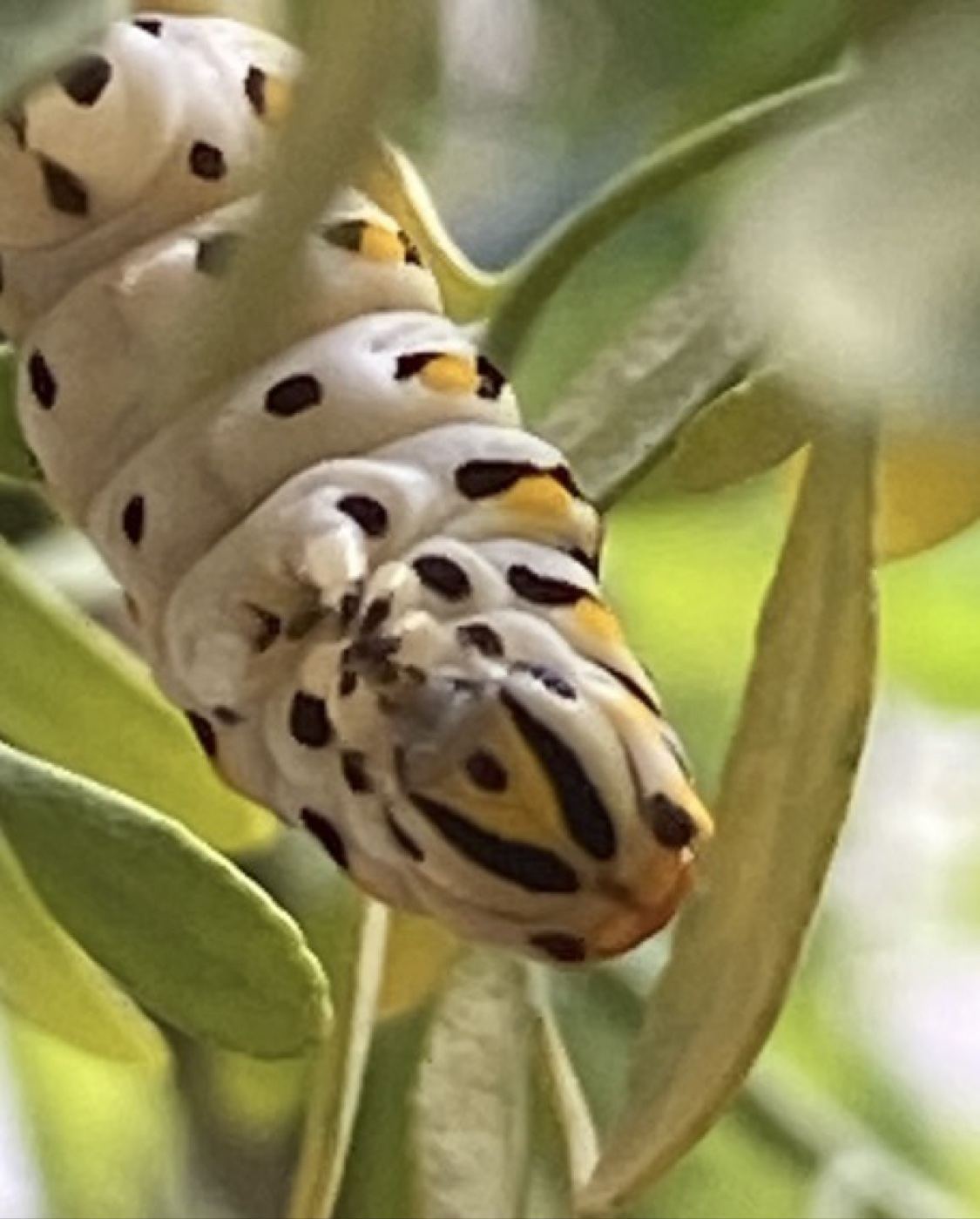
The victim of the shakedown was a black swallowtail — black-winged and yellow-spotted as an adult, and unmistakable as a caterpillar: creamy white with black spots and yellow freckles when young. Its host plants are parsley and dill (plus their cousins fennel and carrot tops), so an herb garden is black swallowtail nursery space.
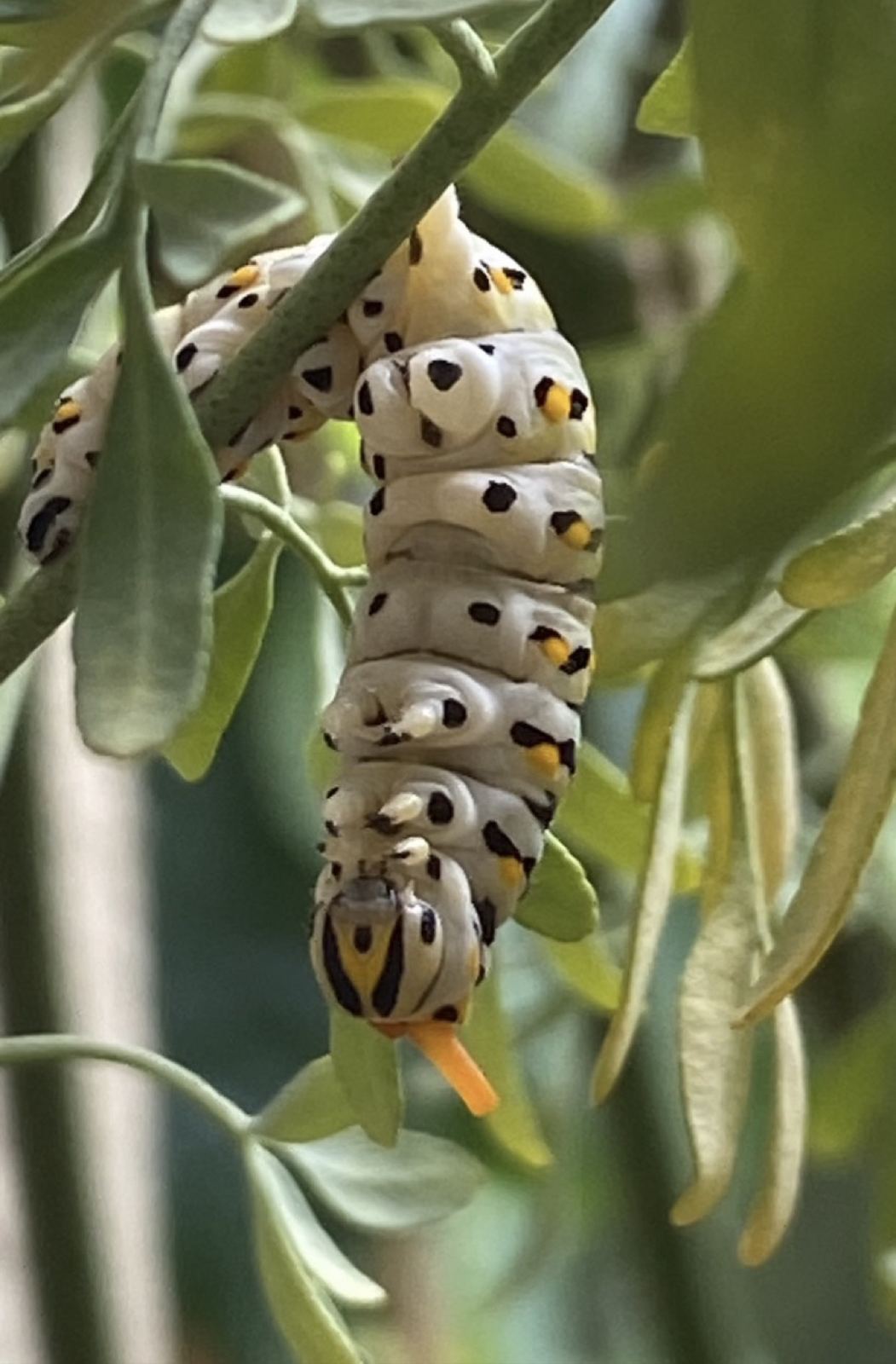
And the bystander isn’t defenseless. Disturb a swallowtail caterpillar and it pops out a hidden orange fork — the osmeterium, a stink horn that reeks of old pineapple to tell predators: absolutely not.
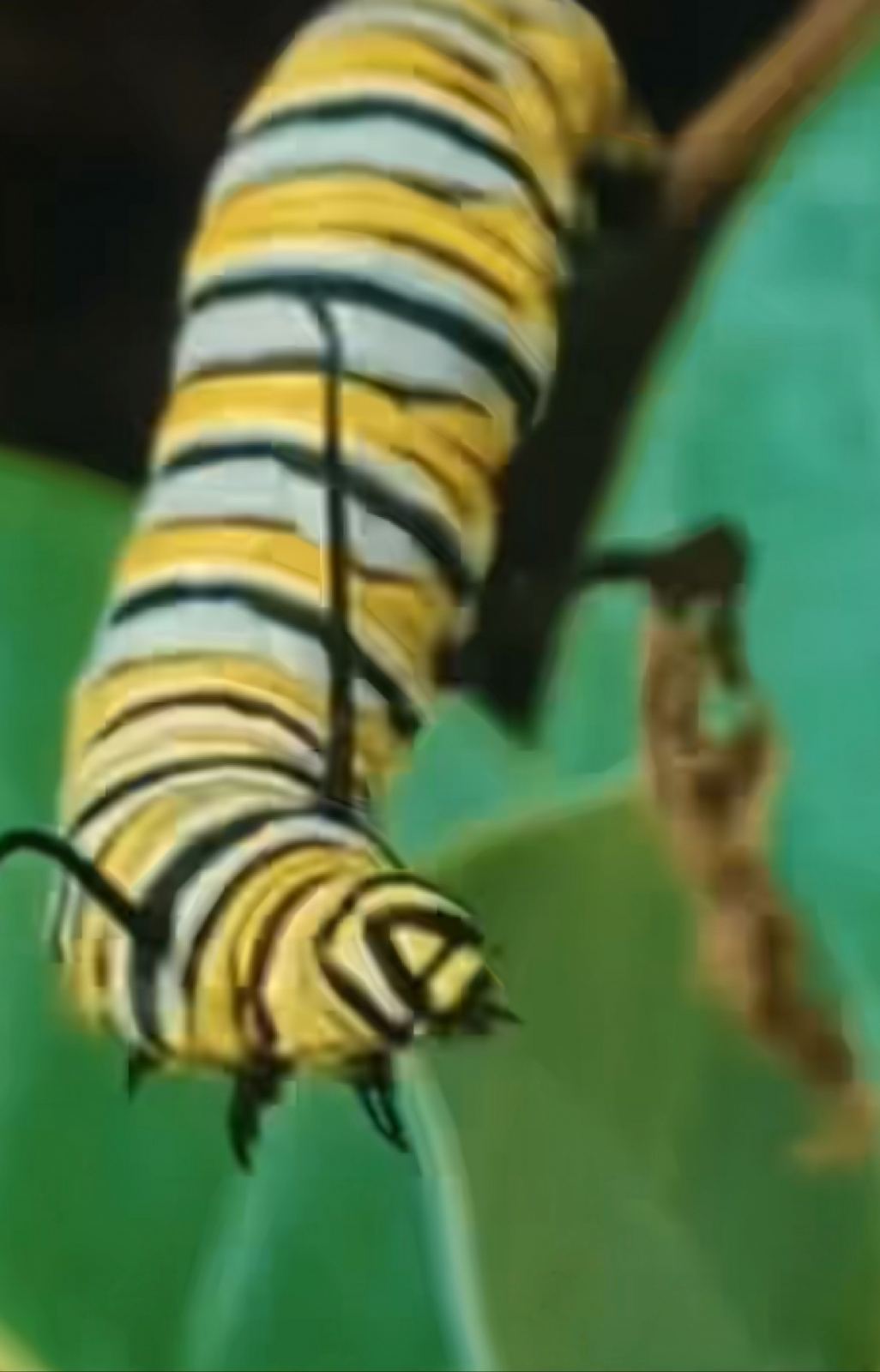
The rivalry starts young — monarch and swallowtail caterpillars, side by side:
How to Keep the Peace in Your Garden
You can’t fence a butterfly, and you don’t need to evict the monarch. You de-escalate by design:
Two buffets, not one.
Plant nectar flowers in two or more separate sunny spots. One monarch can guard a single patch; he can’t be everywhere at once, and the swallowtails will find the unguarded table.
Every species gets its own corner.
Keep the milkweed patch and the parsley-and-dill patch in different parts of the garden. Host-plant neighborhoods spread the caterpillars — and the drama — out.
Give him a lookout post.
A flat rock or a bare twig in the sun gives a patrolling male his perch — ideally away from the busiest flowers.
Plant in generous clusters.
Bigger drifts of each host plant mean nobody’s babies are crowded on one stem.
And keep a little perspective: chasing is a sign of a garden worth fighting over. A truly quiet garden is one with nothing in it. A little drama means you built a habitat everybody wants — peacekeeping just makes sure everybody gets fed.
Garden diplomacy pairs well with royalty: meet the queens in Queen Butterfly Life Cycle and the monarch’s cousin rivalry in Queen Butterfly vs Monarch.