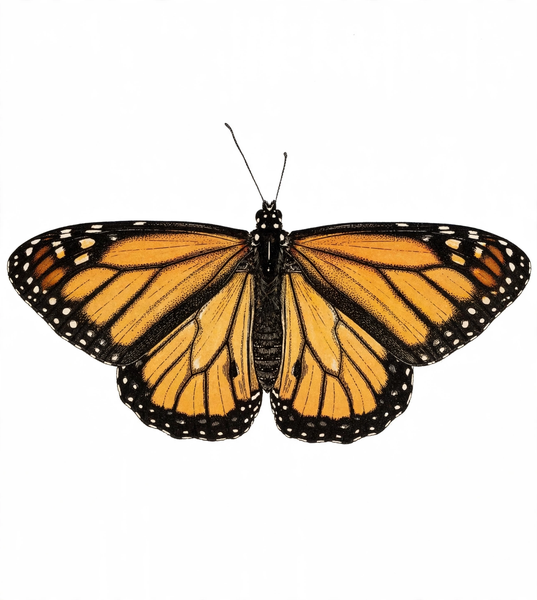
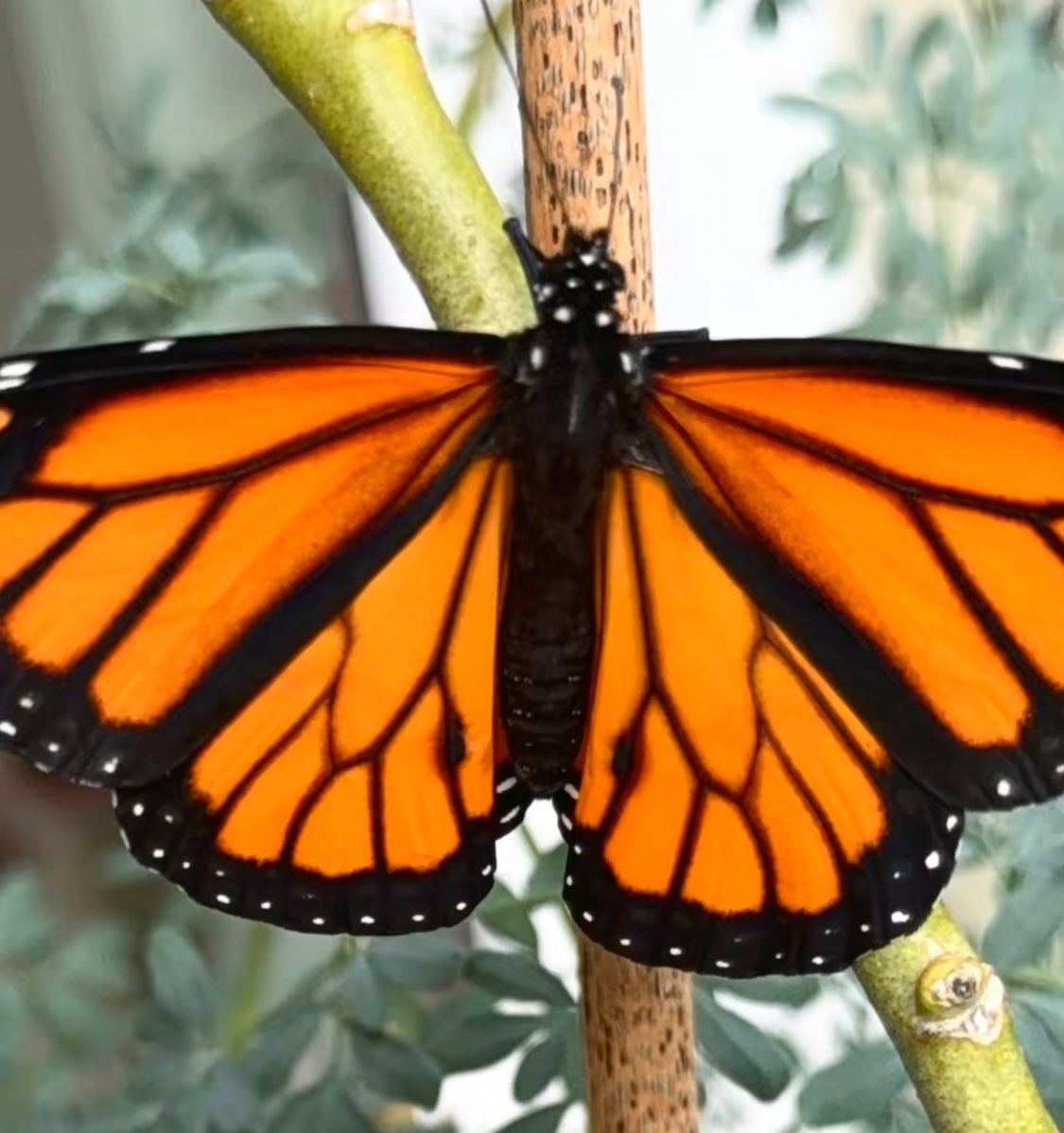
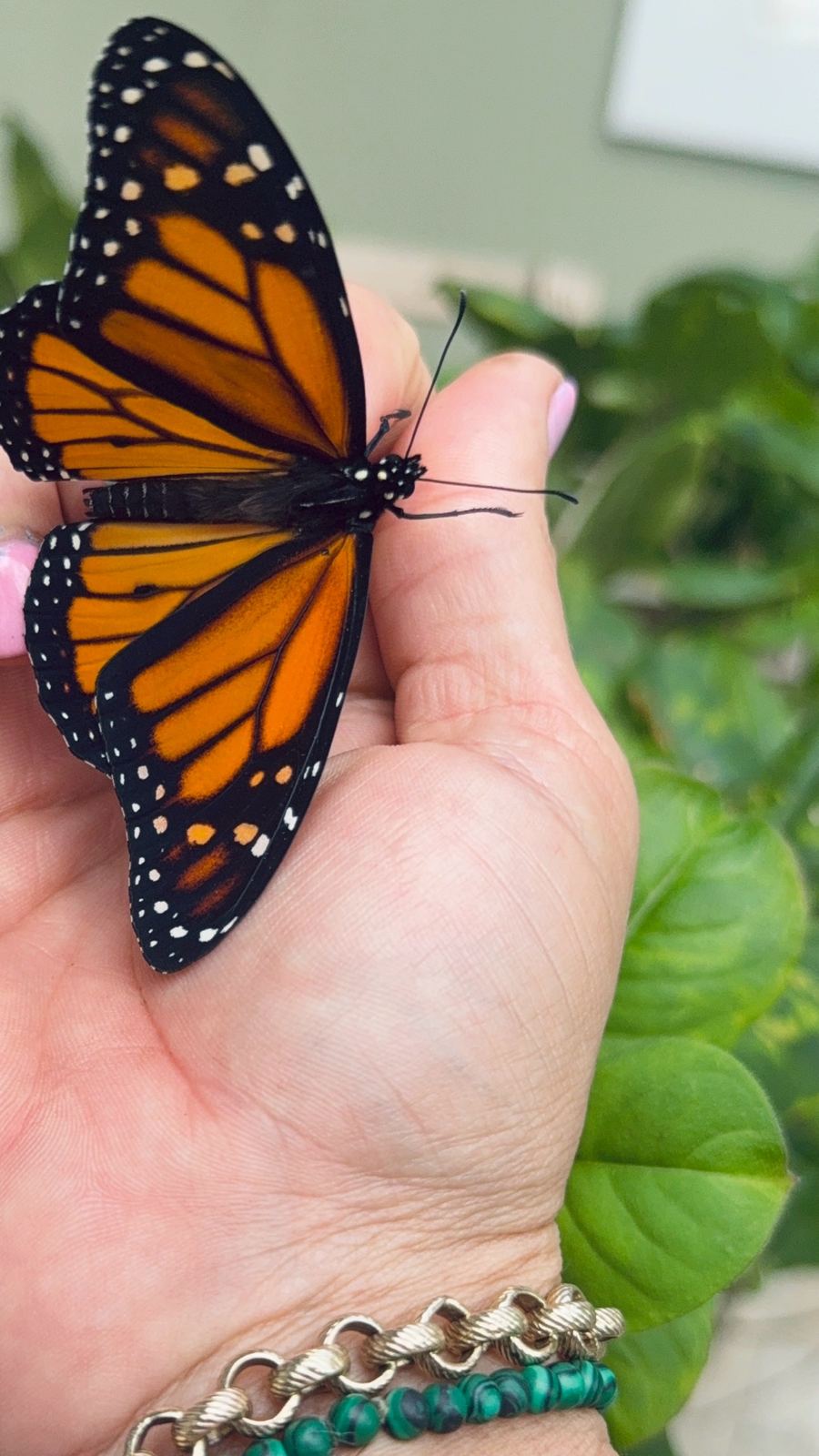
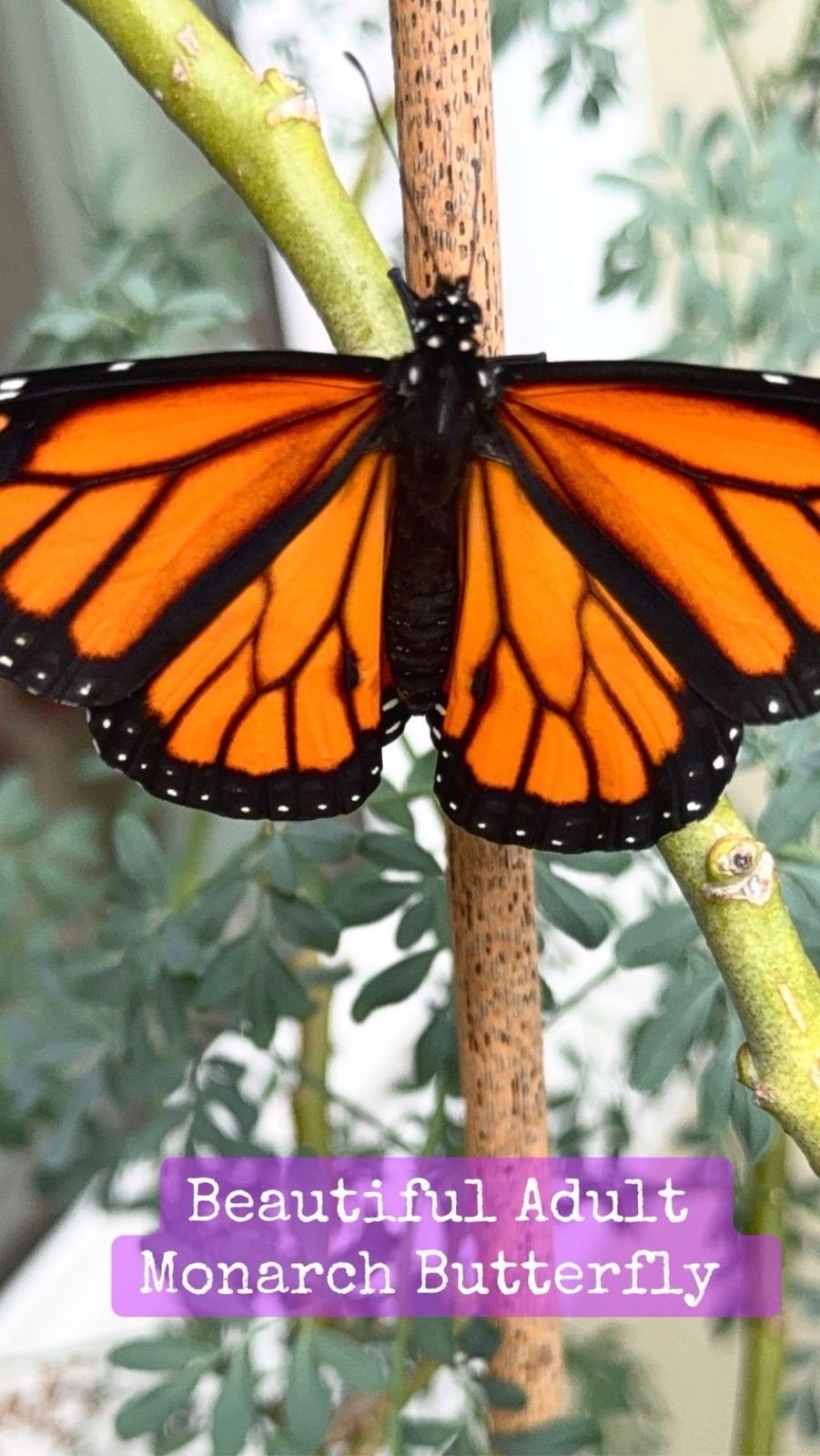
A monarch butterfly with orange and black wings spread wide, perched on a plant stem

butterfly babe

How to identify, attract & support butterflies through their lifecycle

From a pinhead-sized egg on a milkweed leaf to a monarch drying its wings in the morning sun, the whole butterfly life cycle is raised, filmed and photographed here — along with everything you need to learn how to attract butterflies to a butterfly garden of your own.

The lifecycle

Four stages, one small miracle

Every butterfly raised here passes through the same four stages, from caterpillar to butterfly. Use it as a pocket caterpillar guide, too — and look for each stage in your own yard.

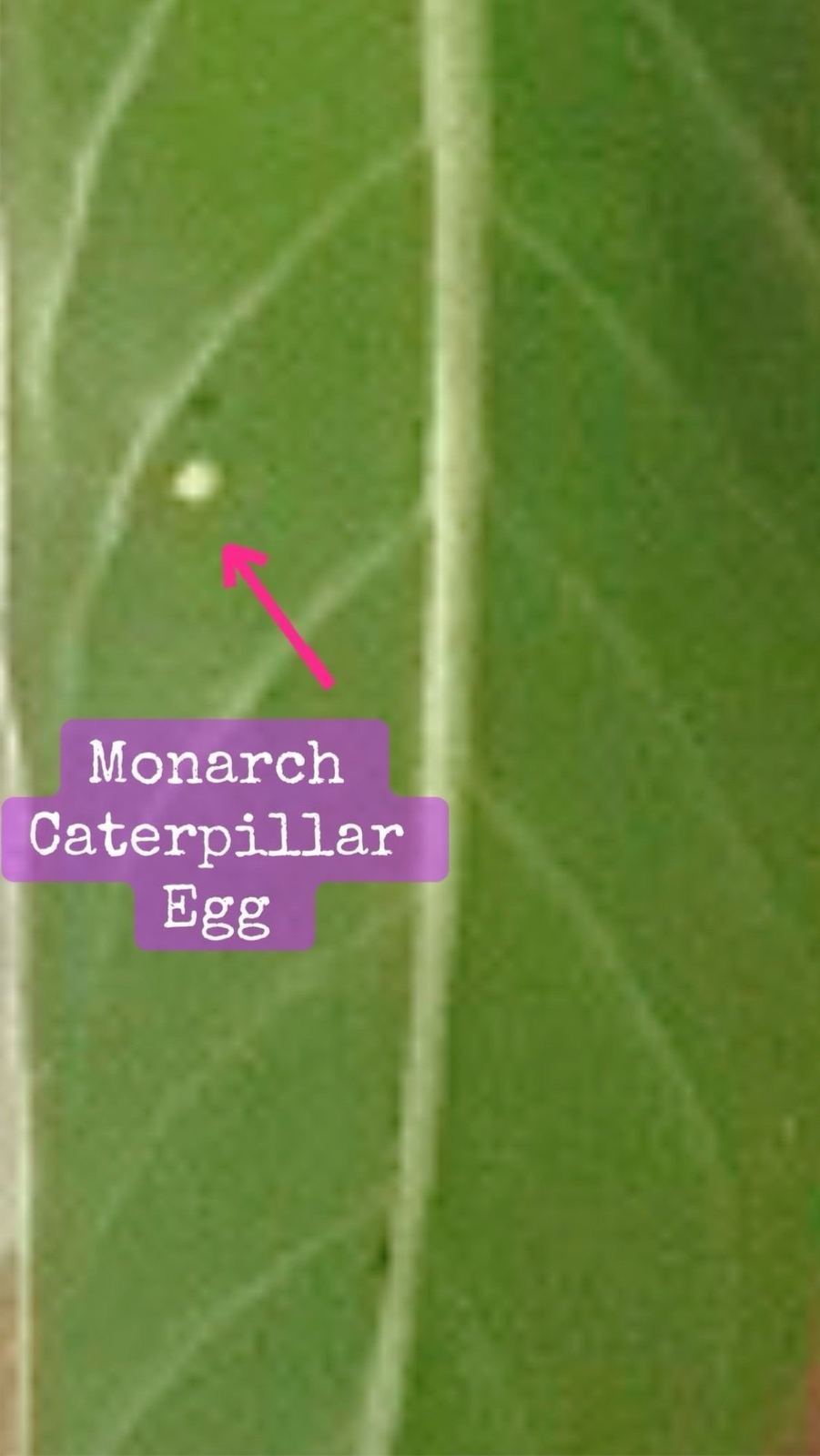
Her own photo of a monarch egg on a milkweed leaf, marked with a pink arrow
Hatches in about 4 days

The Egg

A female monarch lays each egg singly on the underside of a milkweed leaf — up to a few hundred over her lifetime, but rarely more than one per plant. The egg is tiny, ridged, and pale green. In about four days a caterpillar no wider than a thread chews its way out and eats the eggshell as its first meal.

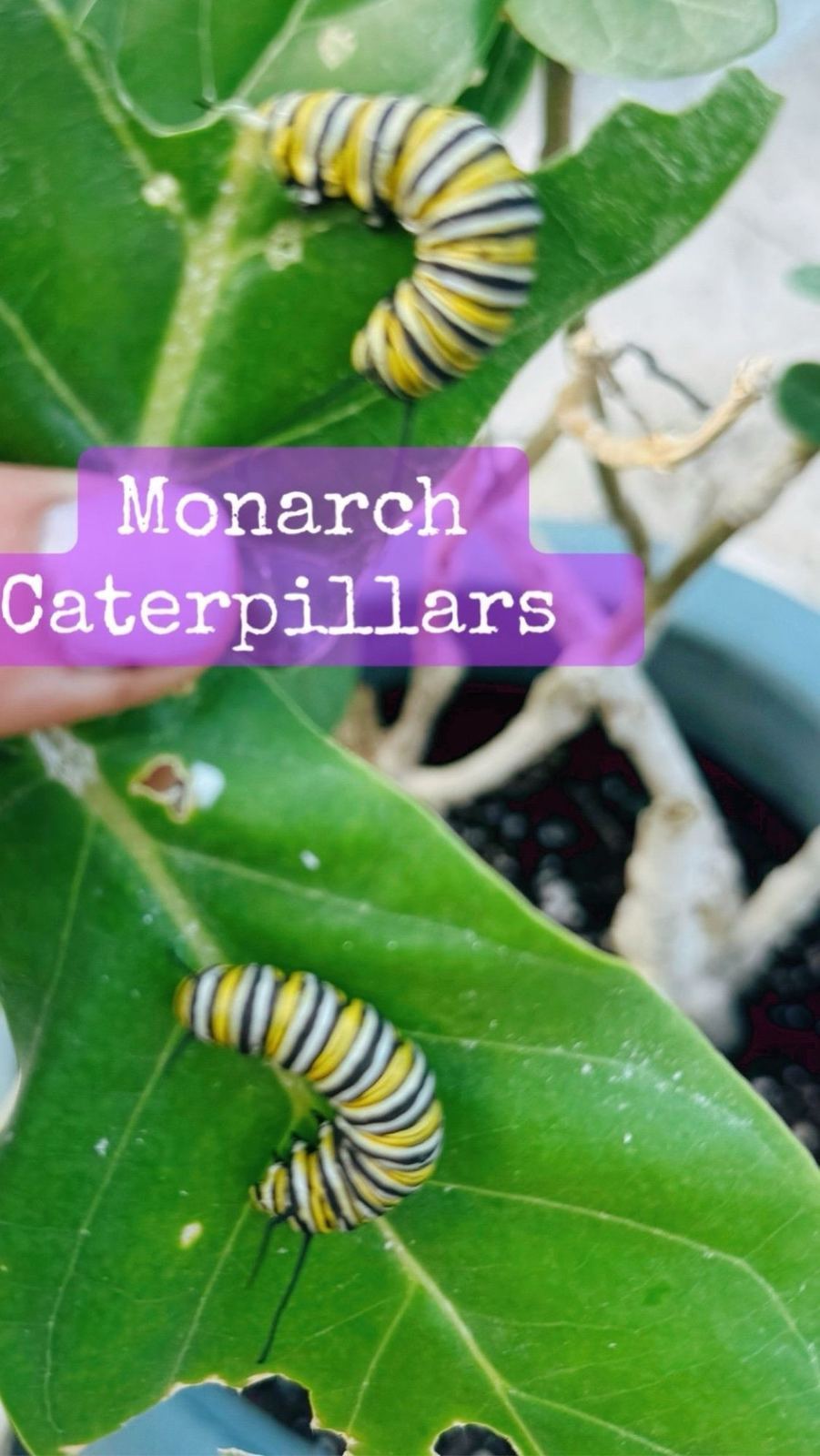
Two of her monarch caterpillars with black, white and yellow stripes on a milkweed leaf
Grows through 5 instars in ~2 weeks

The Caterpillar

For roughly two weeks, eating is the whole job. A monarch caterpillar sheds its skin five times (each stage is an instar) and multiplies its weight thousands of times over. Those bold stripes are a warning: milkweed toxins stockpile in its body, making it taste terrible to birds. Near the end it stops eating and goes wandering — the next stage is coming.

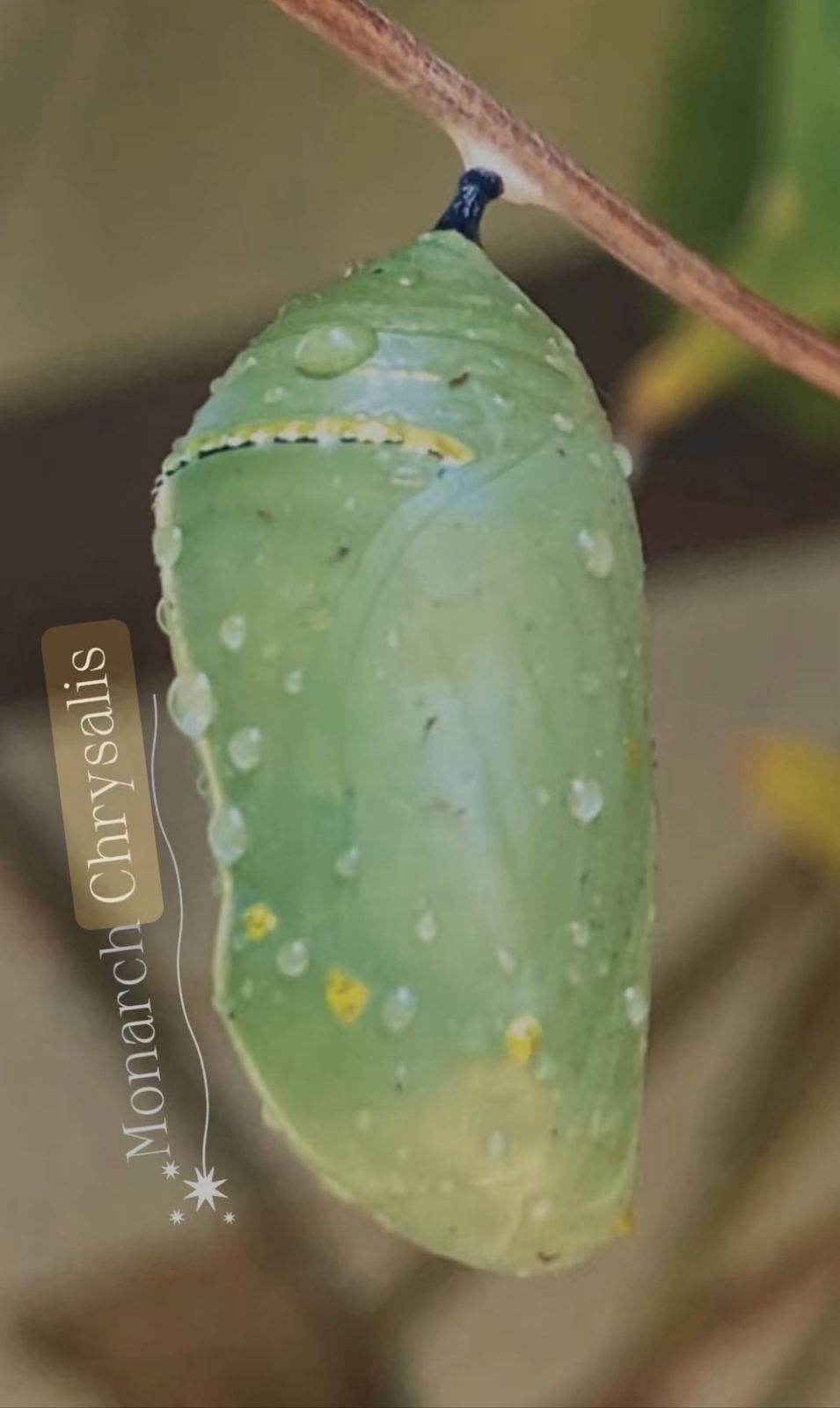
Her jade-green monarch chrysalis beaded with dew drops, hanging from a twig
About 10–14 days of transformation

The Chrysalis

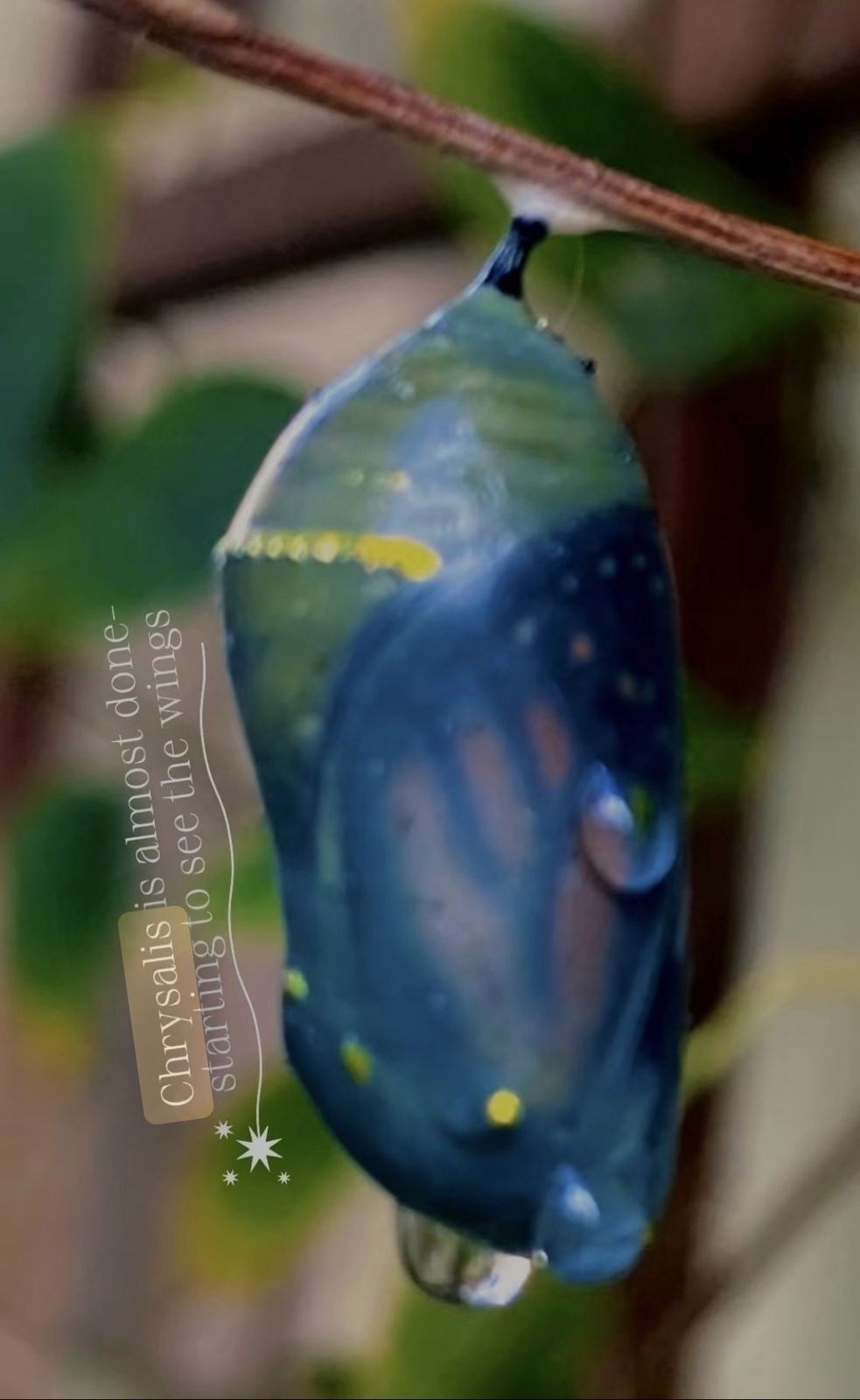
The caterpillar spins a silk button, hangs in a J, and sheds its skin one last time to reveal the chrysalis. Inside, the caterpillar body is almost entirely rebuilt — wings, eyes, and flight muscles form from clusters of cells carried since hatching. As emergence nears, the case turns clear and you can see the folded orange wings waiting inside.

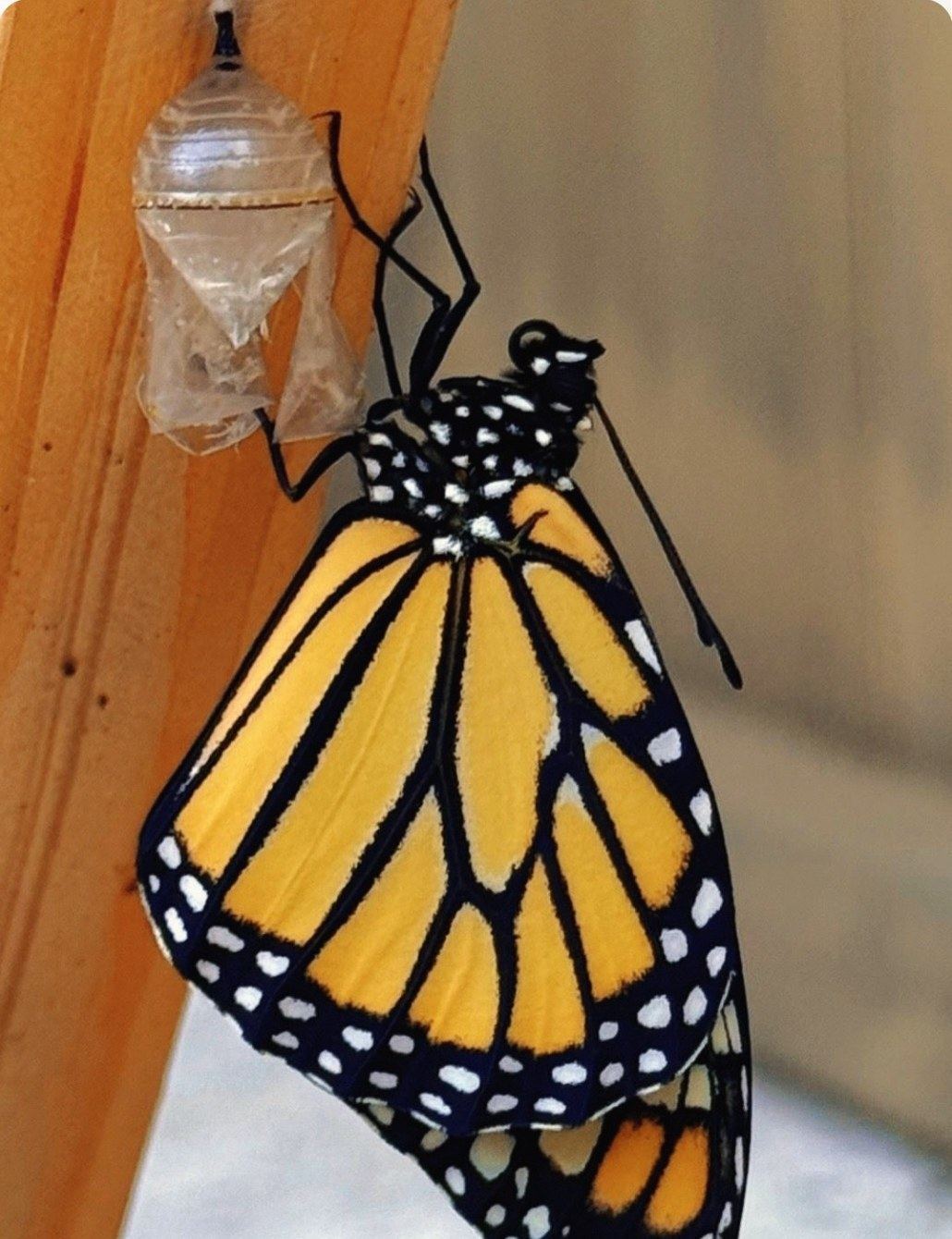
Her newly emerged monarch hanging beside its empty chrysalis case on a wooden post
Adults live 2–6 weeks (migrants, months)

The Butterfly

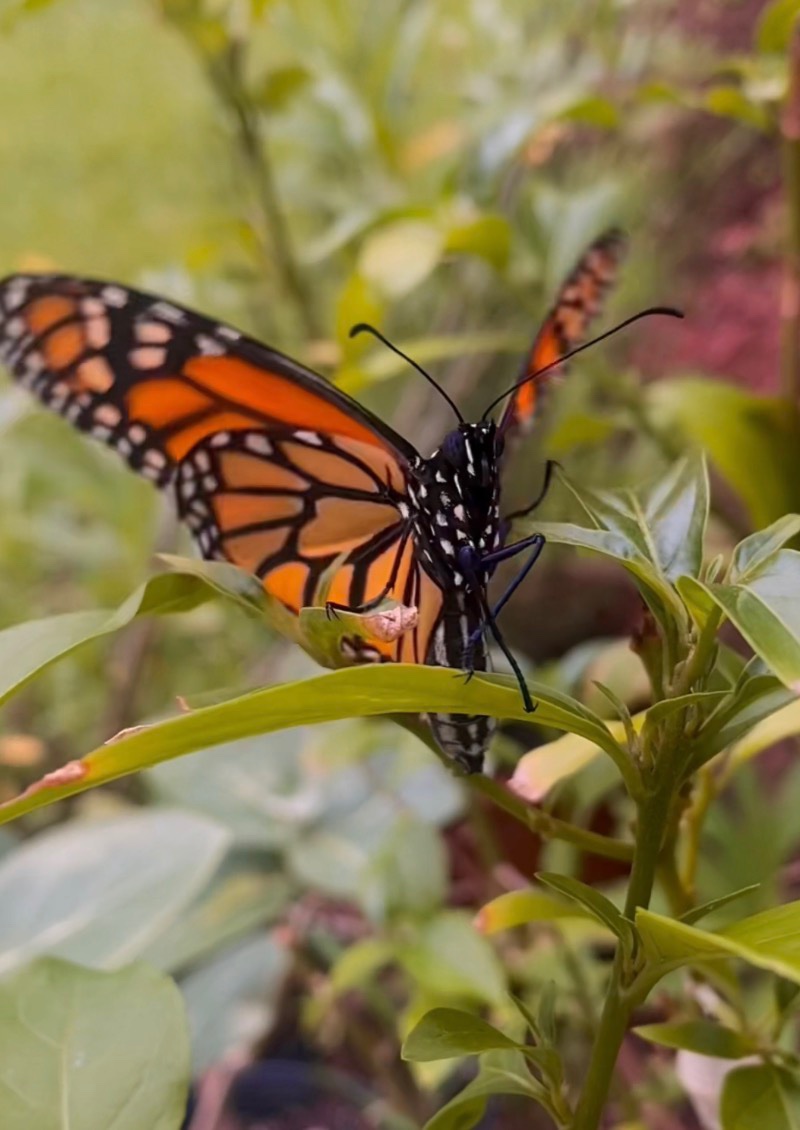
The butterfly emerges with crumpled wings, pumps them full of fluid, and dries them in the sun for two to four hours before its first flight. Summer monarchs live two to six weeks, sipping nectar and laying eggs. The final generation of the year is different — those butterflies fly thousands of miles to overwinter and live up to eight or nine months.

Her dark monarch chrysalis with the orange wings showing through, almost ready to emerge
Chrysalis phases

Almost ready — wings showing through

As emergence nears, the chrysalis case turns clear and the folded orange wings show through.

Field guide

Know your butterflies

Butterfly identification gets easy once you know your locals. This is our butterfly species list from one Florida garden — six species that star here. Learn their markings once and you’ll spot these types of butterflies everywhere.

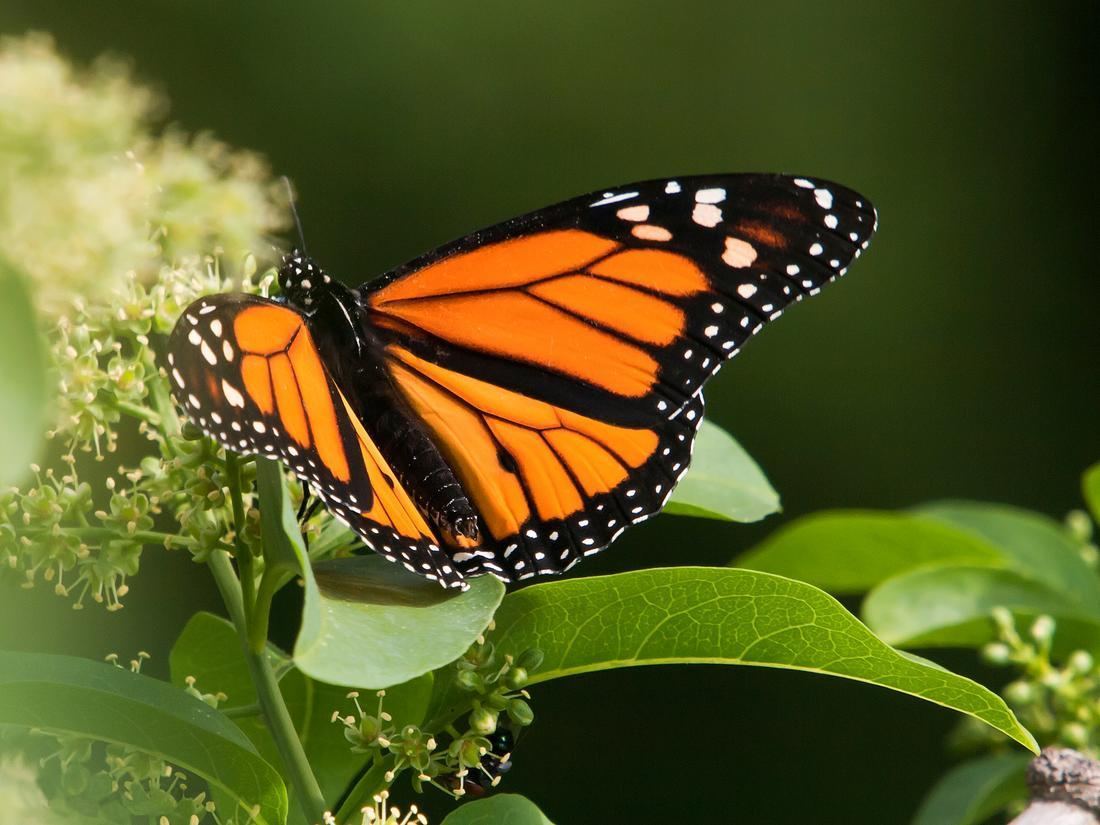
A monarch butterfly with orange wings veined in black, resting with wings open
The icon

Monarch

Danaus plexippus

Burnt-orange wings laced with thick black veins and white-spotted black borders. Males carry a black scent spot on a hindwing vein; females look darker and more heavily veined. The only butterfly that migrates thousands of miles — and returns.
Host plant: Milkweed, and only milkweed
Nectar plants: Milkweed blooms, zinnia, lantana, aster, goldenrod
Attract them: Plant milkweed native to your region in a sunny patch, backed by nectar flowers that bloom from spring through fall.

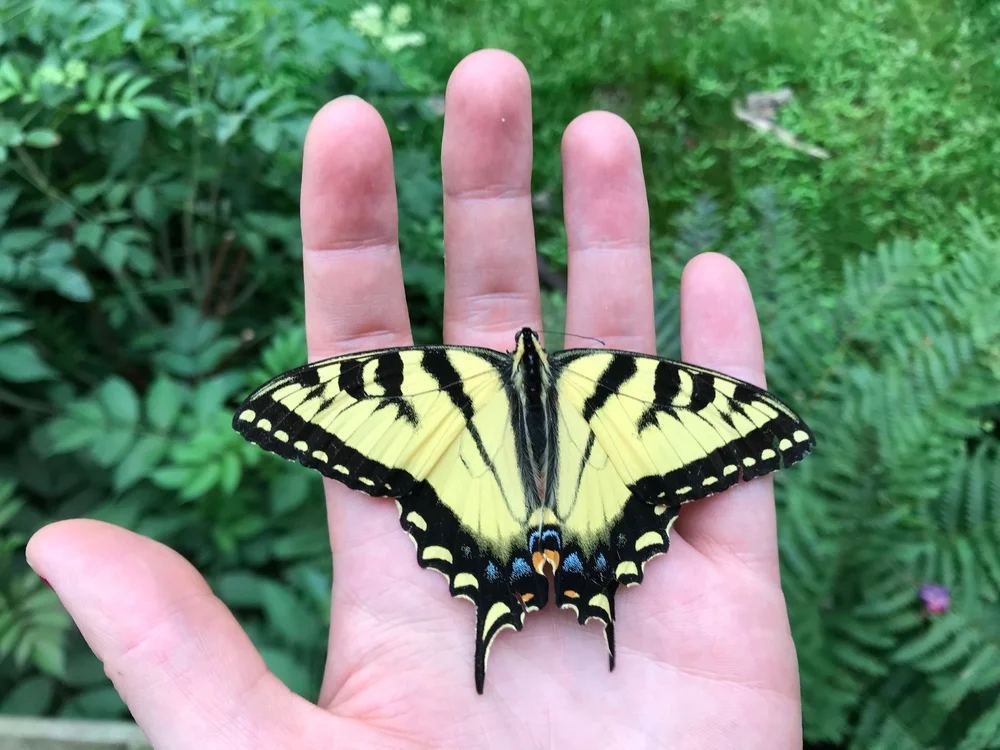
An eastern tiger swallowtail with yellow and black striped wings resting on a hand
The gentle giant

Eastern Tiger Swallowtail

Papilio glaucus

Sunny yellow wings crossed by black “tiger” stripes, with a single tail on each hindwing and blue-and-orange eyespots near the tails — females wear the most blue. Glides more than it flaps, sailing over gardens at treetop height.

Host plants: Tulip tree, wild cherry, ash, lilac
Nectar plants: Lilac, butterfly bush, zinnia, milkweed, Joe-Pye weed
Attract them: Plant a tulip tree or wild cherry for the caterpillars and nectar-rich flowers below it — then watch the canopy line at midday, when adults glide down to drink.

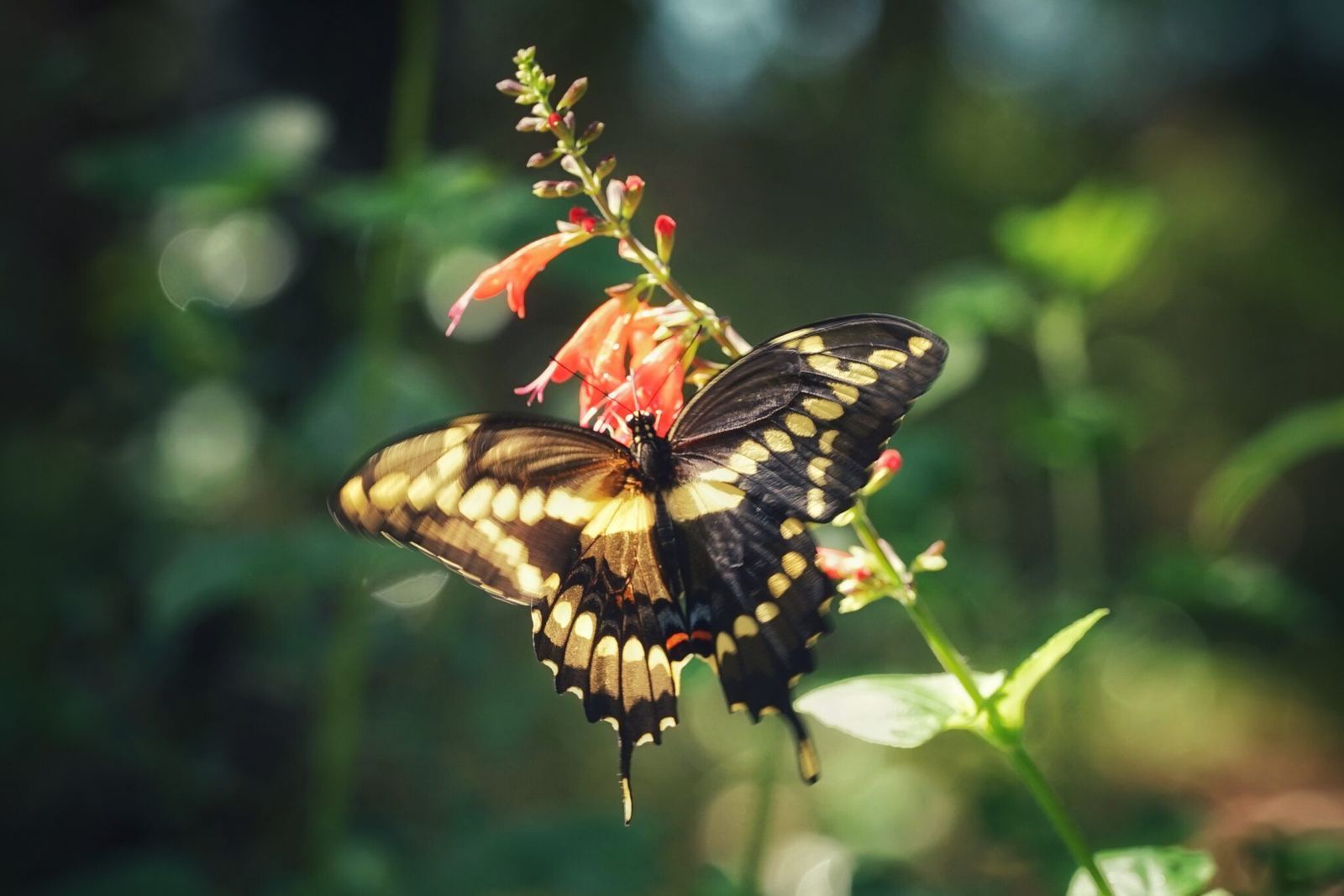
A giant swallowtail butterfly, dark brown with bold yellow bands, wings spread
The biggest of all

Giant Swallowtail

Papilio cresphontes

North America’s largest butterfly, with wings that can span over six inches. Dark chocolate wings are crossed by a bold yellow sash and a row of yellow spots. Its caterpillar is a famous con artist — patterned exactly like a bird dropping.

Host plants: Citrus family — prickly ash, hop tree, citrus trees
Nectar plants: Lantana, zinnia, bougainvillea, hibiscus, pentas
Attract them: Plant a citrus tree, prickly ash or hop tree, and leave the little “bird dropping” caterpillars on it alone — they’re giants in the making.

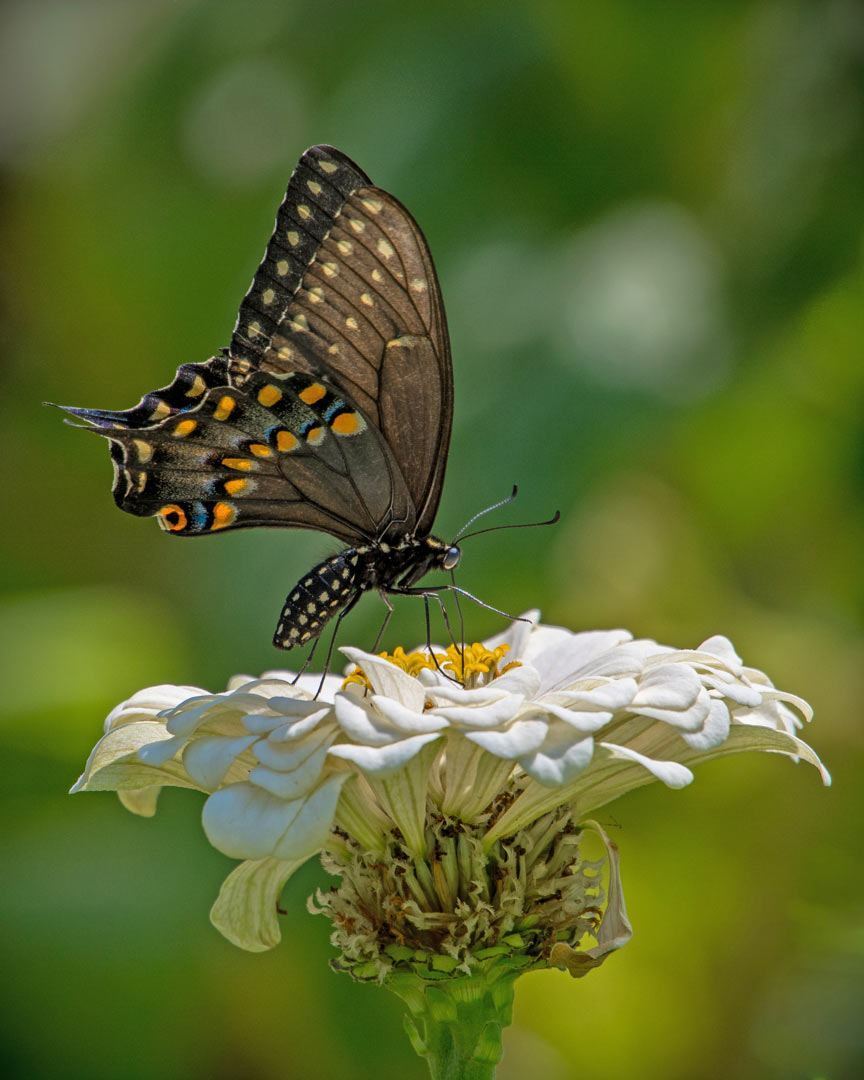
A black swallowtail butterfly with yellow spots along its wing edges
The herb gardener

Black Swallowtail

Papilio polyxenes

Velvet-black wings edged with two rows of yellow spots and an orange eyespot at each tail corner; females trade some yellow for a shimmering blue wash. Check your herb bed — if something is nibbling the parsley, it’s probably this beauty in disguise.

Host plants: Parsley, dill, fennel, carrot tops, parsnip
Nectar plants: Zinnia, milkweed, clover, lantana, the flowers of the host herbs themselves
Attract them: Plant twice the parsley and dill you need — half for the kitchen, half for them — and let a few plants flower for nectar.

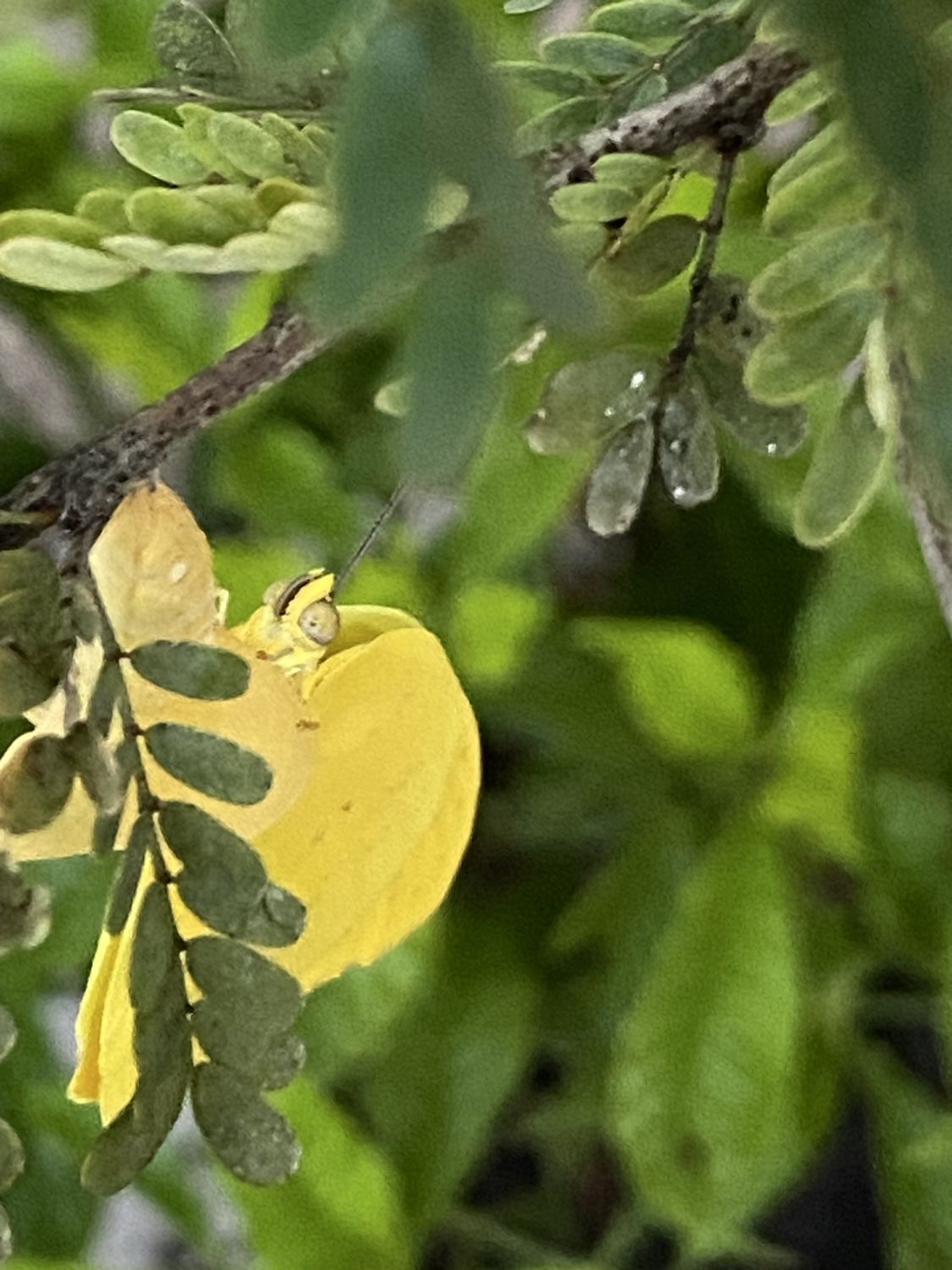
Her photo of a cloudless sulphur, bright lemon-yellow with barely a marking, resting among senna leaves
The sunbeam

Cloudless Sulphur

Phoebis sennae

Pure lemon-yellow wings with almost no markings at all — that clean, unclouded yellow is how it earns its name. One of the strongest, fastest fliers in the garden, it streaks across sunny beds like a scrap of summer sunshine and is among the first butterflies out in spring.

Host plants: Senna and cassia
Nectar plants: Lantana, hibiscus, bougainvillea
Attract them: Plant a senna or cassia in your sunniest corner and ring it with red and orange tubular flowers — sulphurs patrol hot, bright spots all day long.

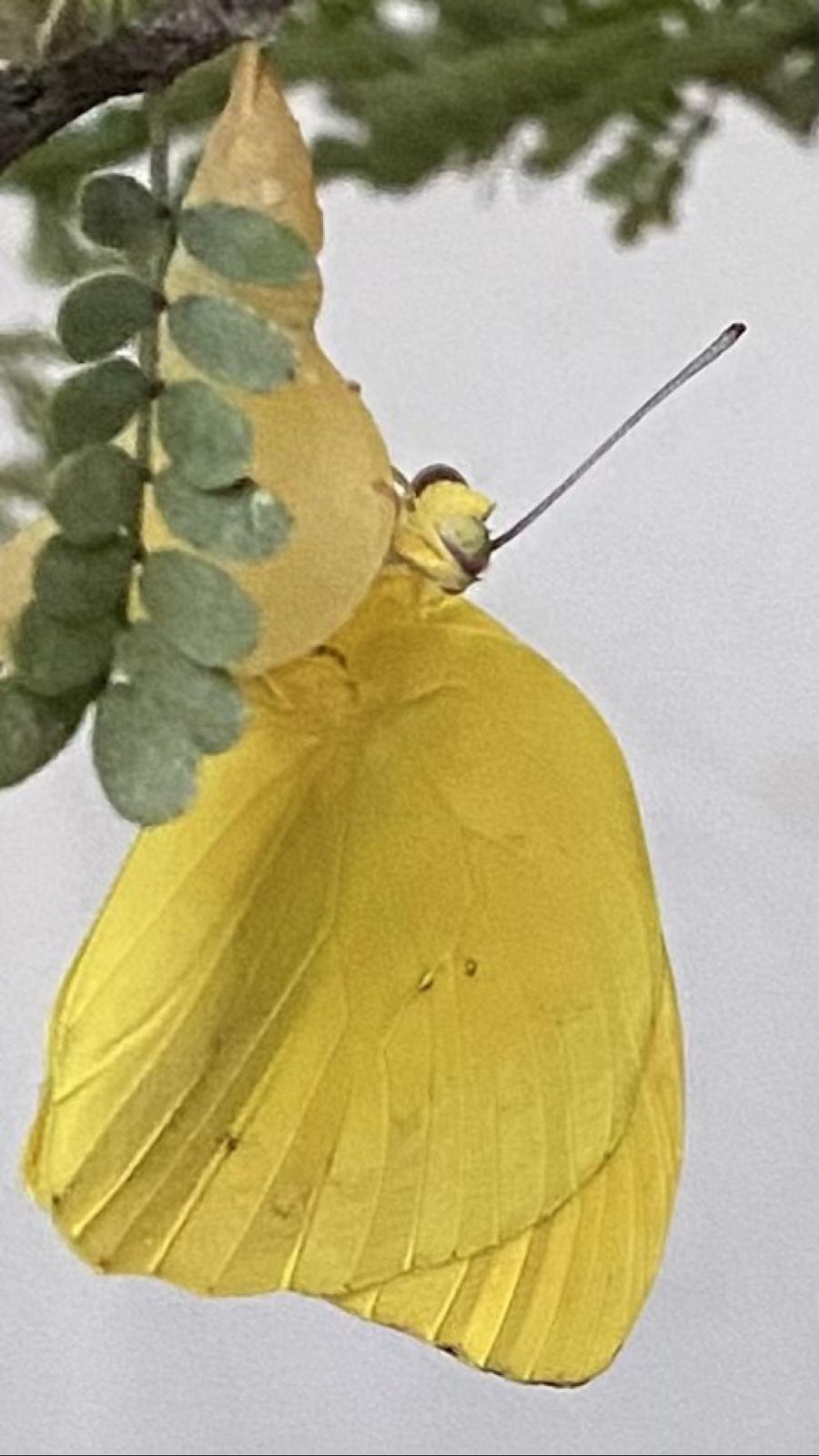
Her cloudless sulphur hanging beside its pale, leaf-shaped chrysalis moments after emerging
Just emerged, beside its chrysalis
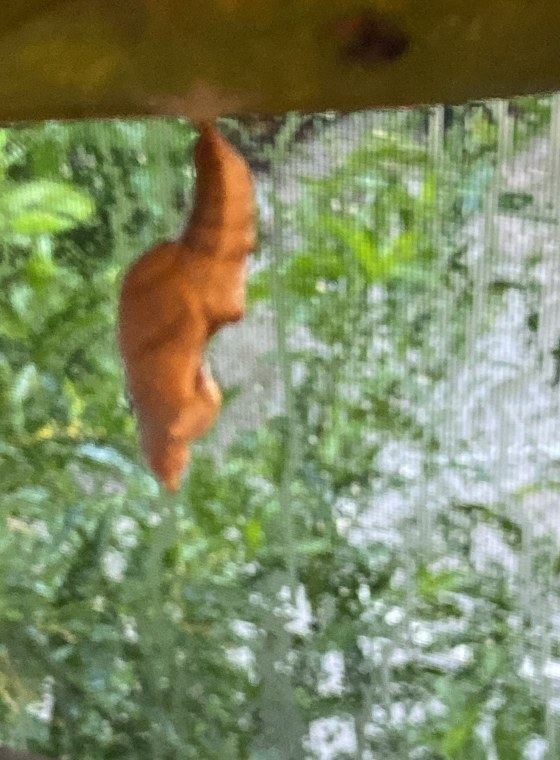
Her cloudless sulphur chrysalis — orange-brown and shaped like a curled leaf — hanging beneath a leaf
The leaf-shaped chrysalis
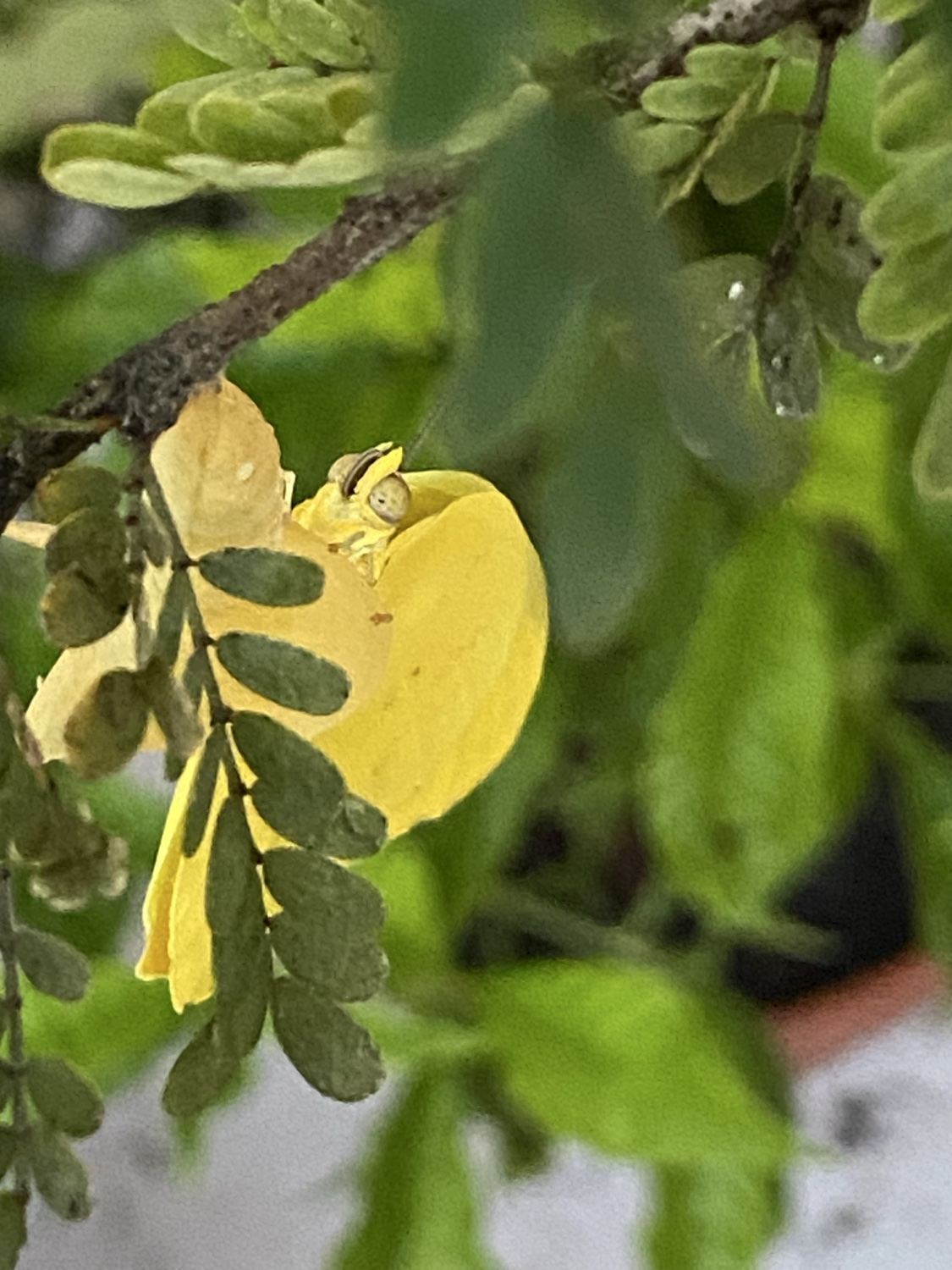
Her cloudless sulphur resting among the leaflets of its senna host plant
At home on its senna
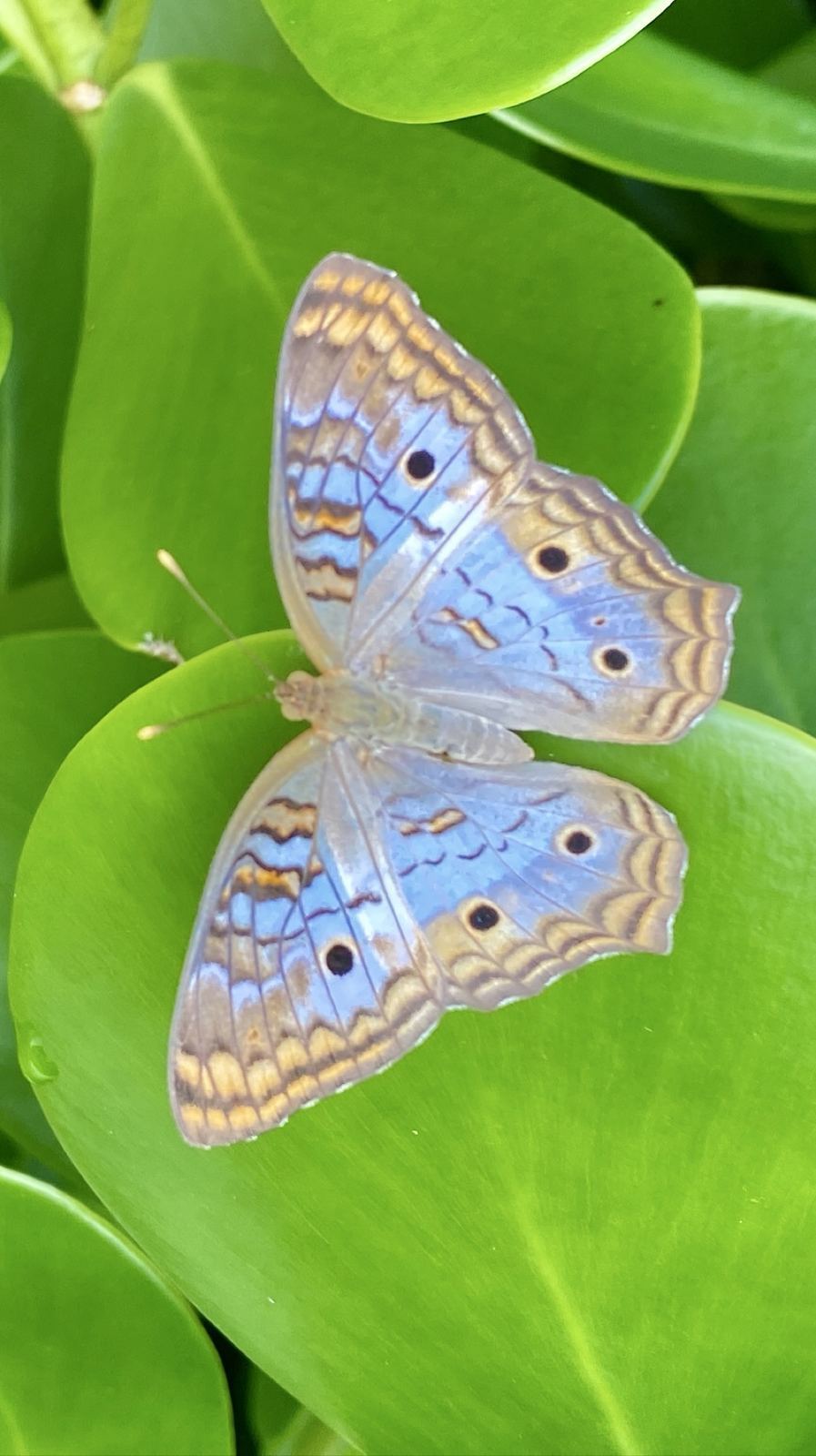
Her photo of a white peacock butterfly with white wings, scalloped brown edges and dark eyespots, basking on a glossy green leaf
The low flier

White Peacock

Anartia jatrophae

White wings traced with wavy brown lines, scalloped edges and a row of dark eyespots — like a tiny peacock feather pattern painted on porcelain. A butterfly of damp, sunny places in the warm South, it skims low over the ground instead of soaring, and basks flat on leaves with wings spread wide.

Host plants: Water hyssop and frogfruit
Nectar plants: Frogfruit, porterweed, lantana
Attract them: Let frogfruit spread as a low groundcover in a sunny, slightly damp spot, and add porterweed and lantana nearby — white peacocks rarely stray far from their host plants.

A little science for the road: butterflies and moths both belong to the insect order Lepidoptera — the “scaled wings.” And the classic moth vs butterfly question is answered by the antennae: butterflies in general have club-tipped antennae, fly by day, and rest with their wings folded upright, while most moths have feathery antennae and rest with their wings flat or tented.

Every emergence, filmed as it happens 🦋

The Butterfly Babe YouTube channel is home to real-time chrysalis emergences, caterpillar close-ups and garden tours — the next best thing to standing in the garden yourself. Watching there is the single best way to support the butterflies — every view helps.

Visit the YouTube channel