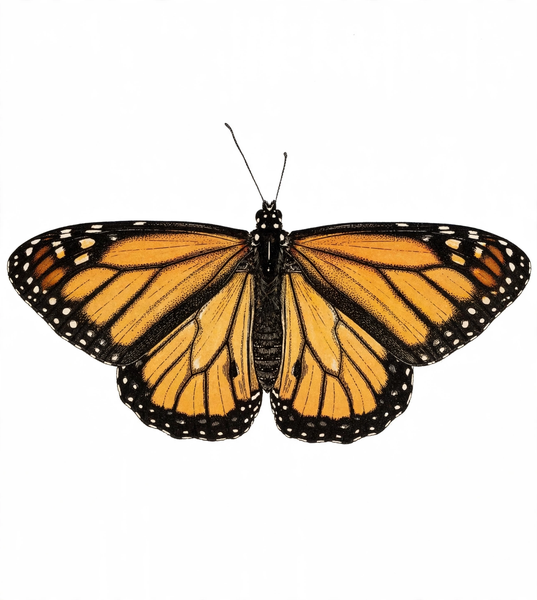
Queen Butterfly Life Cycle: Egg, Caterpillar, Chrysalis & Butterfly
Meet the monarch’s cousin — the queen butterfly. She wears the same orange, eats the same milkweed, and fools almost everybody. Her transformation video has already stopped 24,000 thumbs on YouTube — here’s the queen butterfly life cycle, stage by stage, from a pinhead egg to a mahogany-winged queen.
Watch a queen butterfly transform:
Egg
A queen begins as a single pale, ribbed egg laid on milkweed — the same host plant her monarch cousins use. Females scatter eggs across milkweed leaves, stems and flower buds, one here, one there, so every hatchling wakes up with the table already set.
Caterpillar
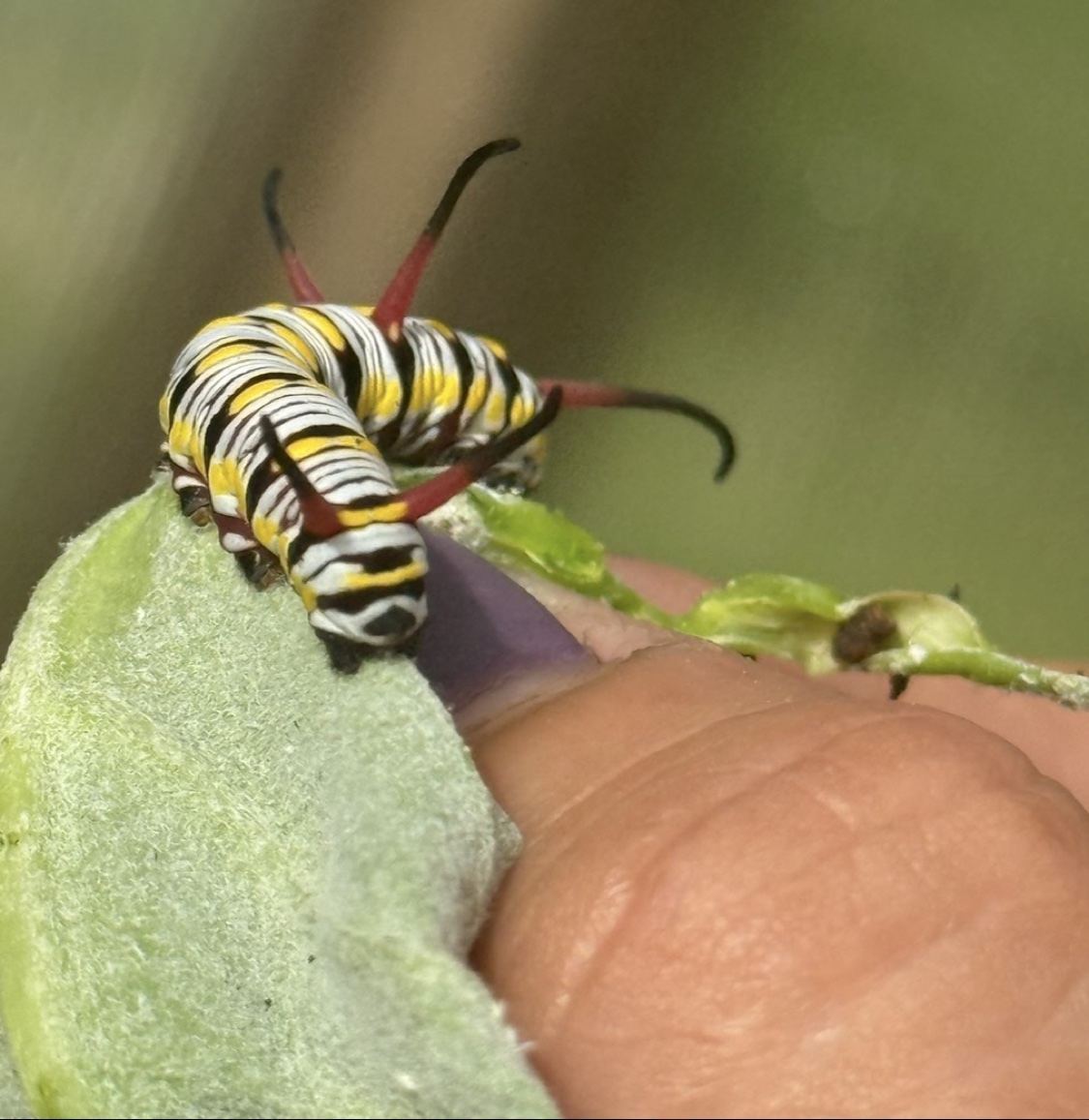
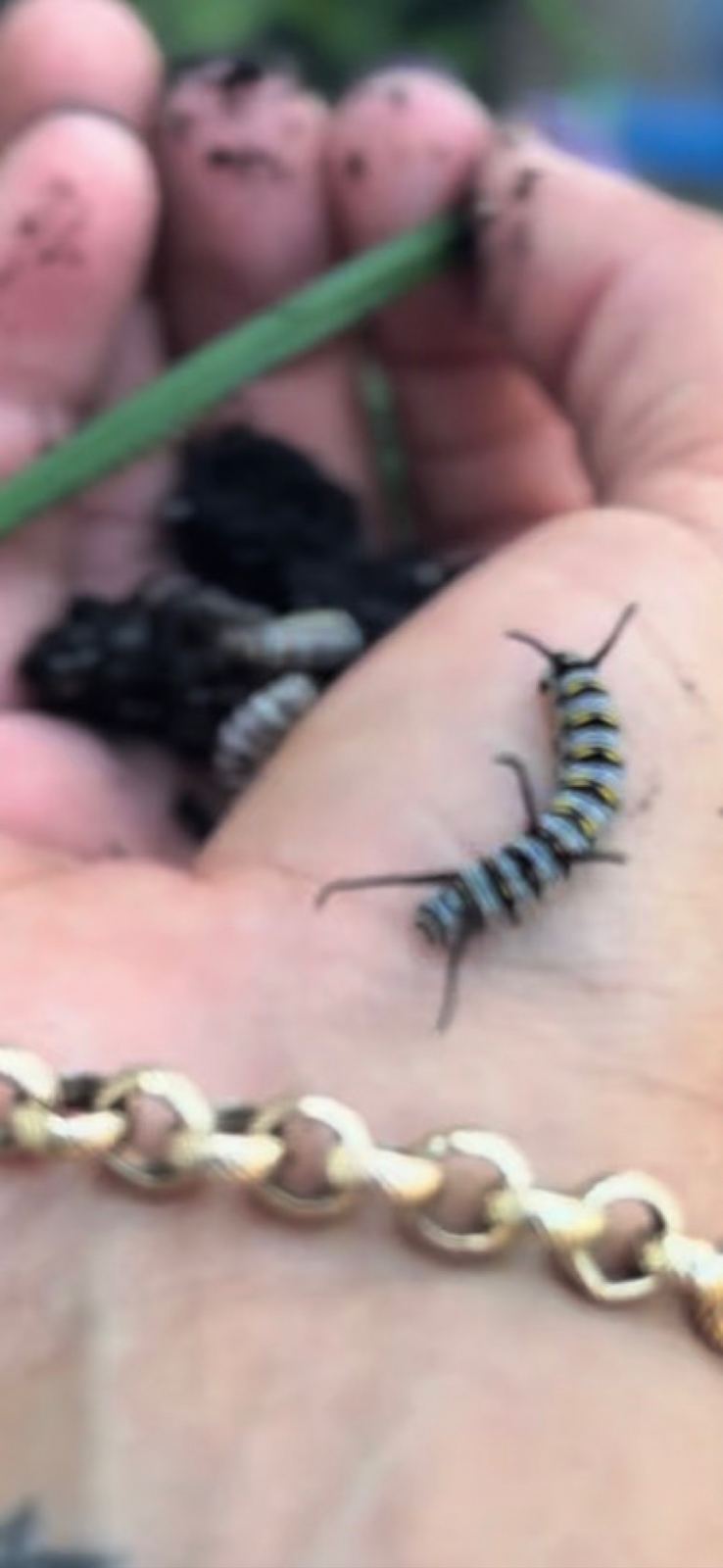
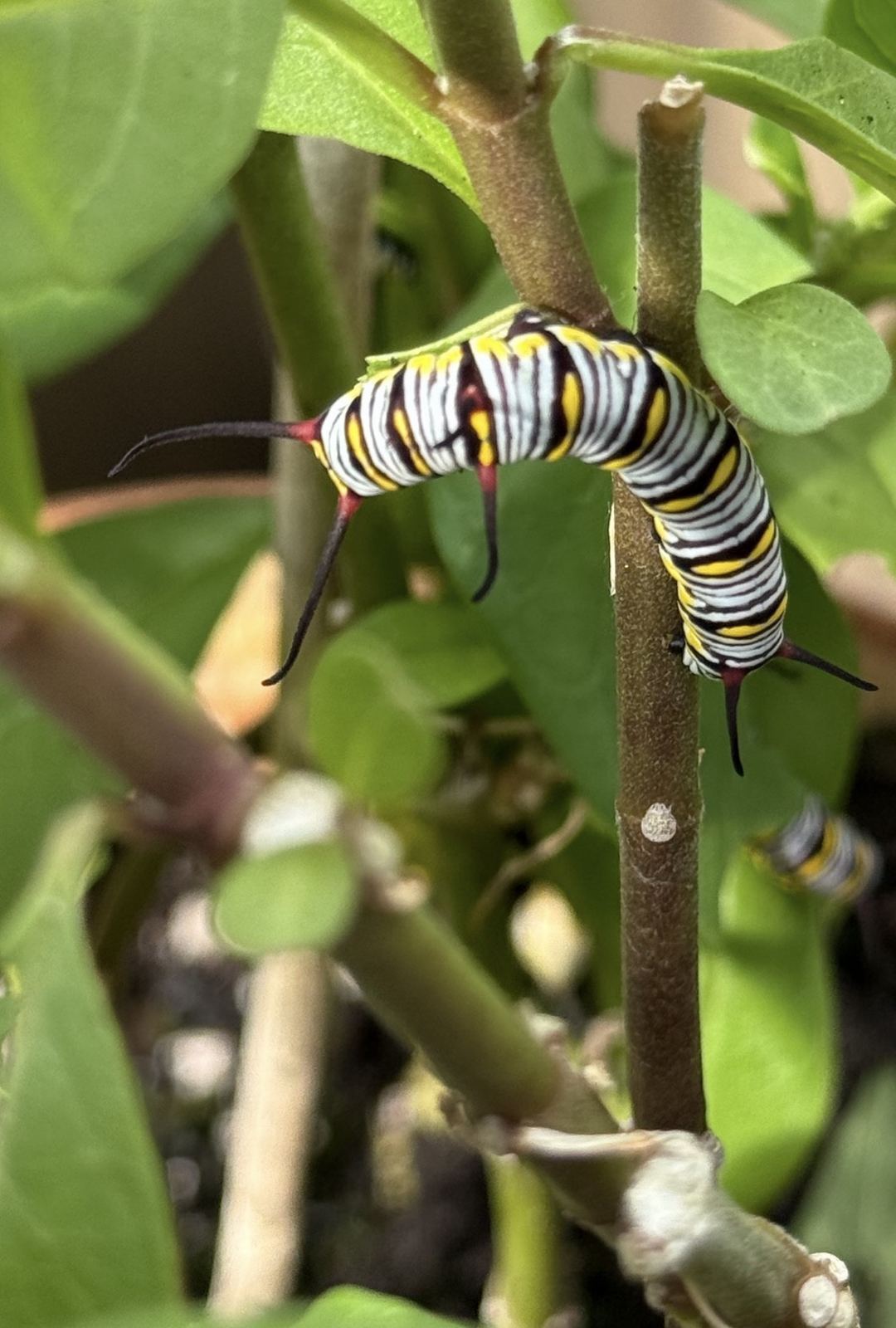
The queen caterpillar wears the family stripes — black, white and yellow — but with a twist of wine-red woven through them. Like monarch caterpillars, she eats milkweed and nothing else, growing through five molts in about two weeks, storing up the plant’s bitter toxins as a chemical shield birds learn to respect.
Chrysalis
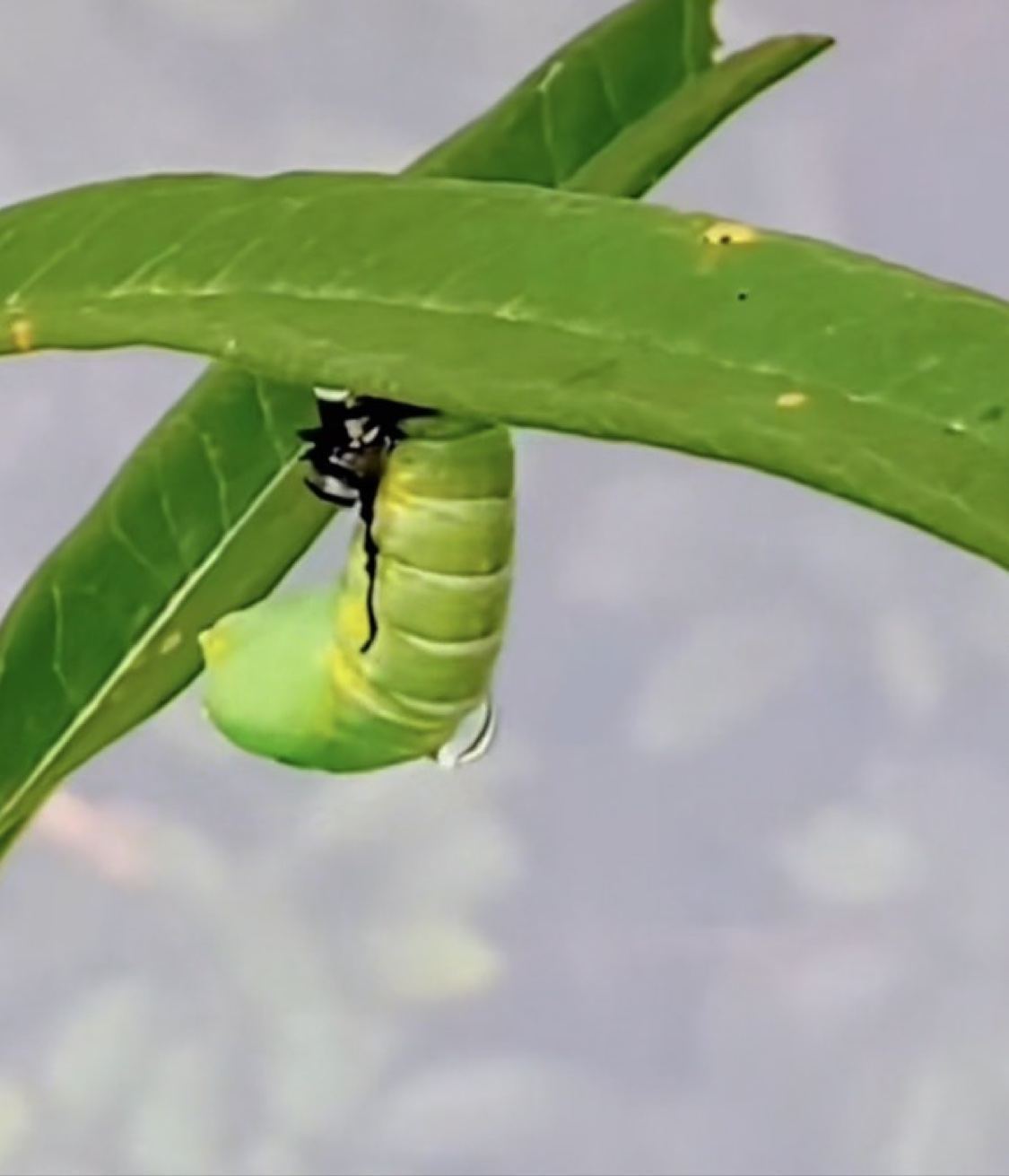
Full-grown, she wanders off the plant, spins a silk button, and hangs in a J. Within a day she sheds her skin one last time and becomes a jade-green chrysalis. The chrysalis is the pupa stage — the still, hidden stretch when her body is rebuilt from caterpillar to butterfly — and the full transformation runs about a week to ten days in Florida warmth.
Butterfly
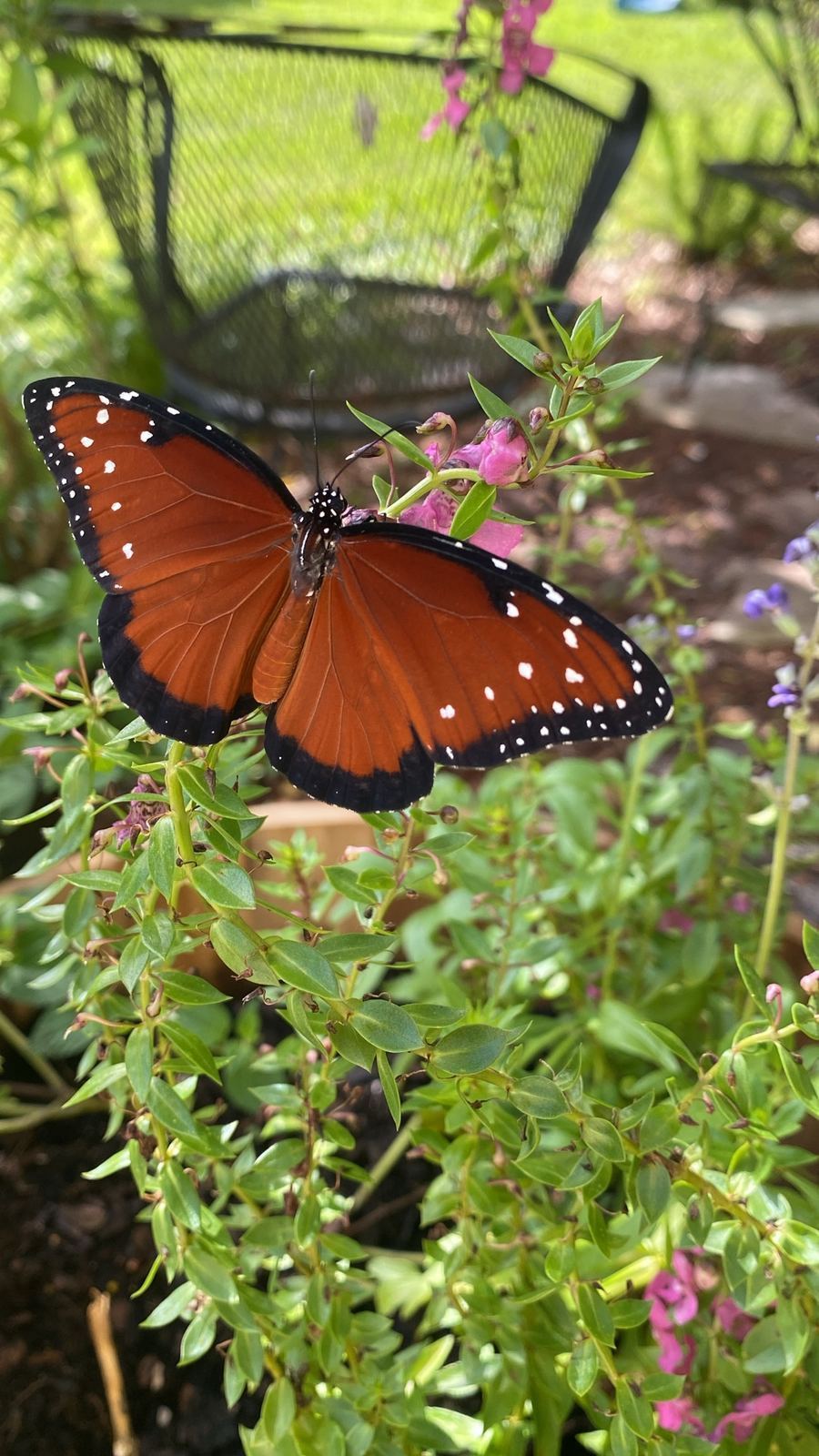
Out comes royalty: a rich mahogany-orange butterfly with white spots sprinkled right across her wings. Queens don’t migrate like monarchs — in Florida they fly and breed nearly year-round, so a good queen garden is almost never without one.
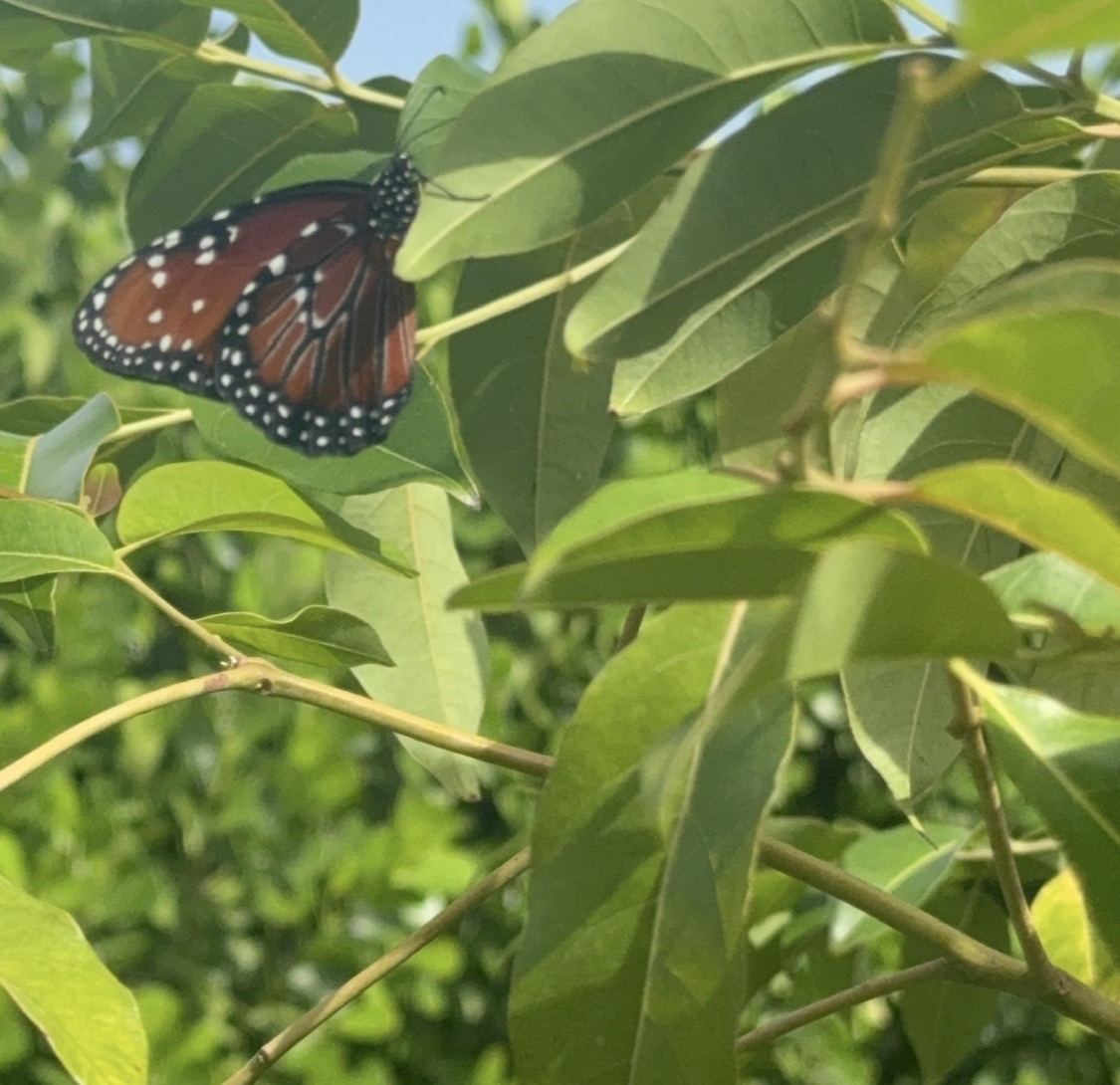
Another queen transformation, up close:
Think that butterfly in your garden is a monarch? Read Queen Butterfly vs Monarch next — then learn How to Attract Queen Butterflies to Your Garden.