Moth or Butterfly? Meet the Melanchroia, Florida’s Day-Flying Moth
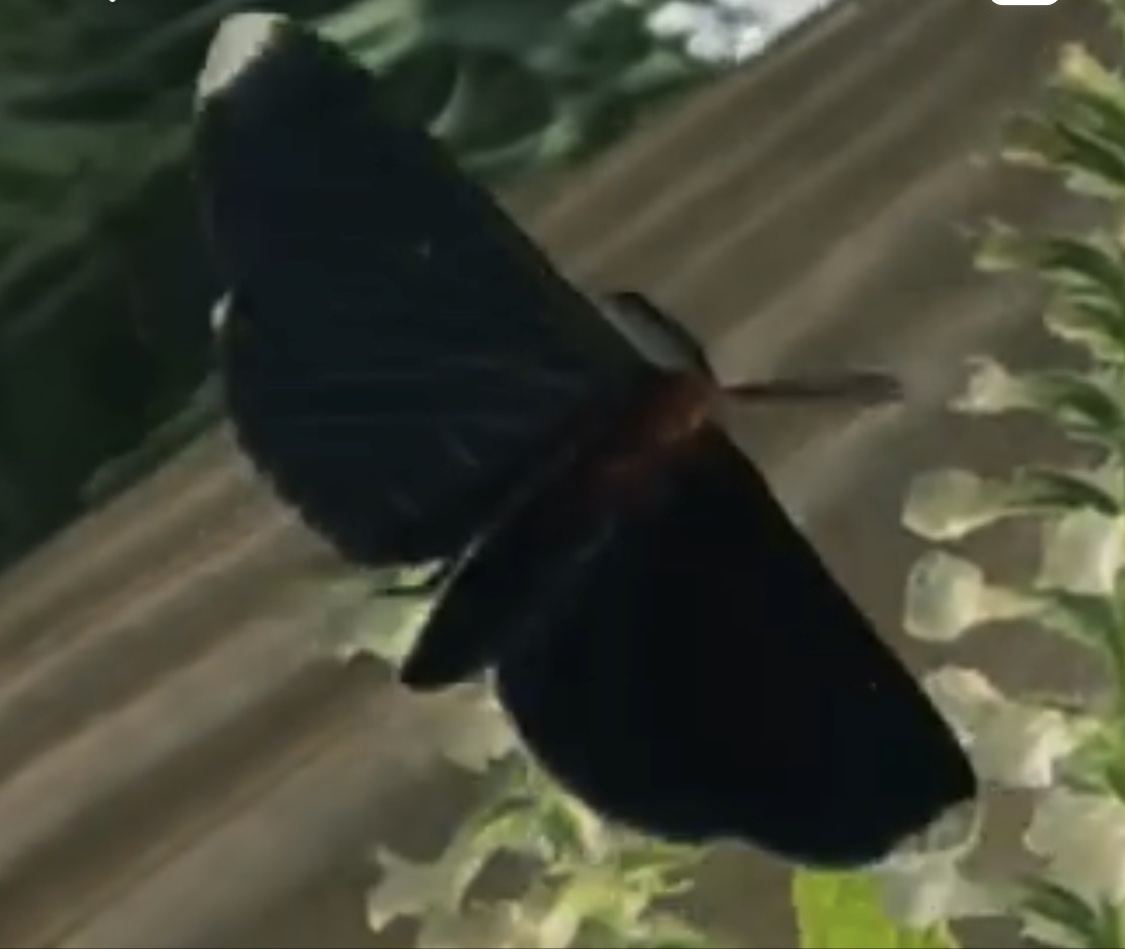
She has iridescent black wings tipped in white, she works the sweet almond blossoms in broad daylight, and nearly everybody who sees her makes the same mistake: that’s no butterfly. This is a Melanchroia — the white-tipped black moth — and she’s one of the best teachers in the Florida garden, because she breaks every ‘rule’ people use to tell moths and butterflies apart.
Watch her work the sweet almond blossoms:
So How Can You Tell She’s a Moth?
Look past the pretty wings. Moth identification starts with the antennae: a butterfly’s antennae end in a neat little club; a moth’s antennae are feathery or plain threads with no club — hers are threads. Butterflies are built slim; moths run stout and fuzzy, like her plush black body. And at rest, butterflies usually fold their wings up like a sail, while she spreads hers flat to soak up the sun. That’s moth vs butterfly in one line: same order — Lepidoptera — different family style.
Wait — Moths Fly in the Daytime?
‘Moths only come out at night’ is a myth. Thousands of moth species fly by day, and the Melanchroia — a true day-flying moth — is a regular on Florida flowers from morning to afternoon. The night shift is real too — leave a porch light on and you’ll meet the other half of the Lepidoptera workforce, quietly pollinating while the butterflies sleep. Moths aren’t the understudies; they’re the second shift.
How to Attract Moths Like Her to Your Garden
Nectar plants: sweet almond bush is a superstar — fragrant white blossoms that pull in pollinators — moths, butterflies and bees alike; porterweed, lantana and plumbago keep the buffet going.
Host plants: her caterpillars feed on snowbush, so a snowbush in the corner is an open invitation.
Attract them: plant the nectar shrubs in sun, skip the pesticides, and check your flowers at different hours — the cast changes all day, and some of the best actors wear black.
More garden royalty awaits: meet the Queen Butterfly Life Cycle and the monarch posts on the blog.