Butterfly Life Cycle for Kids: A Free Coloring Page & Real-Photo Activity Pack
Some butterflies are raised right here in a sunny Florida garden — watched from the day they’re laid as eggs smaller than a sprinkle until the morning they open their wings for the very first time. Every photo in this post (and in the free activity pack below) is a real butterfly from that garden, because kids learn best when the pictures are real. No clip art here — just the true story of a monarch, in four amazing acts.
Act 1: The Egg 🥚
A mother monarch glues a tiny egg — about the size of the tip of a crayon — underneath a milkweed leaf. Milkweed is the ONLY plant a monarch caterpillar can eat, so mom chooses carefully. If you’re planting for monarchs, choose milkweed that’s native to your area; it’s the kind local monarchs know and trust. In about four days, a very hungry guest hatches.
Act 2: The Caterpillar 🐛
Out pops a caterpillar no bigger than a grain of rice — and eating is its whole job. It munches milkweed leaves day and night, and as it grows it sheds its skin five times, like outgrowing five sets of pajamas. In about two weeks it’s a plump, striped caterpillar nearly two inches long, and it’s ready for the most magical part of all.
Act 3: The Chrysalis 💚
The caterpillar hangs upside down in a “J” shape, sheds its skin one last time, and — surprise! — underneath is a smooth green chrysalis with a row of golden dots, like a tiny jewel. Inside, the caterpillar’s body completely rebuilds itself. This is called metamorphosis. After about ten days, the green fades, the chrysalis turns dark and clear, and you can see orange wings folded inside. Something wonderful is about to happen…
Act 4: The Butterfly 🦋
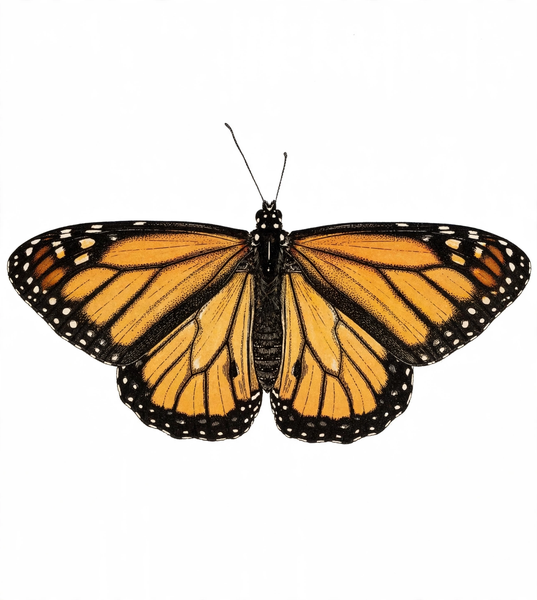
Out comes a monarch! Its wings start out small and crumpled, so it pumps them full and hangs in the sunshine to dry. Then — lift off! A grown monarch sips nectar from flowers like mistflower, lantana, and zinnias (tasting with its feet, believe it or not), and fall monarchs may fly all the way to Mexico, up to 2,500 miles, on wings you could tear like tissue paper. From sprinkle-sized egg to world traveler, in about a month.
For Teachers & Homeschool Parents
The butterfly life cycle is a classic elementary science unit for a reason: it’s observable, it’s dramatic, and it teaches metamorphosis, habitats, and plant–animal partnerships in one story. So we turned our garden photos into the Monarch Life Cycle Activity Pack — six printable pages built from real photographs of real monarchs at every stage — and we’re giving the whole pack away free:
- Meet the Monarch — a kid-friendly fact sheet
- Label the Life Cycle — a labeling worksheet with a word bank and answer key
- Cut & Order — sequencing cards kids cut out and put in story order
- Color Your Own Monarch — a coloring page traced from a real photo, wing veins and all
- My Butterfly Journal — an observation page for drawing and writing about a real butterfly sighting
Print one page for a quick lesson or the whole pack for a full unit — it’s yours, from our garden to your classroom.
Free Download: The Complete Monarch Life Cycle Activity Pack 🦋
All six pages, free. No catch — we just want more kids (and grown-ups) falling in love with butterflies, because people protect what they love.
More From the Garden
Love the photos in the pack? The same garden shots are available as art prints and posters in the butterfly babe shop — beautiful for a classroom wall, a nursery, or any butterfly lover’s home.
Plant a Welcome Sign
The best butterfly lesson of all grows in the ground: plant native milkweed (the monarch’s host plant — the only leaves its caterpillars eat) and nectar flowers like mistflower, lantana, and zinnias, and the life cycle will come visit your yard or school garden all on its own. Then all you have to do is watch — and take pictures. 🦋
More free butterfly printables live on our Free Printables page — and for the grown-up version of this story, see Queen Butterfly Life Cycle and the monarch posts on the blog.