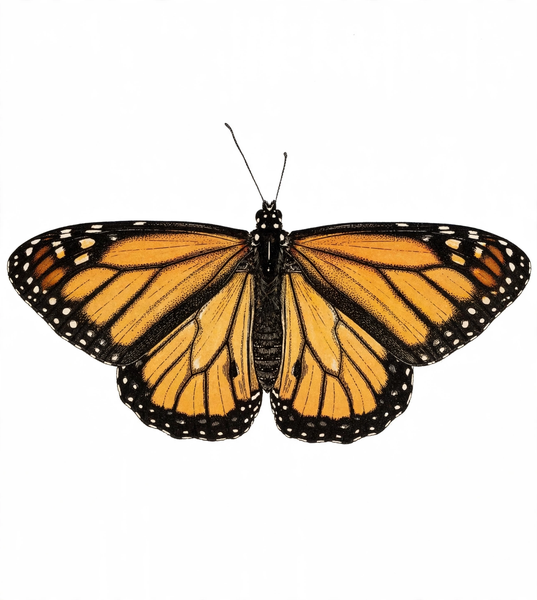
Zebra Longwing Life Cycle: From Egg to Florida’s State Butterfly
The zebra longwing (Heliconius charithonia) is Florida’s official state butterfly — and one of the most graceful sights in a Florida garden, drifting slowly through the shade on long black wings striped with pale yellow. Here’s its full butterfly lifecycle — every stage from egg to caterpillar, and from chrysalis to butterfly — photographed in our Florida garden.
Watch a zebra longwing caterpillar become a butterfly — the full transformation:
Watch the lifecycle transformation of Florida’s state butterfly:
Watch the full zebra longwing life cycle:
Egg
The female lays tiny yellow ribbed eggs, one by one or in small clusters, on the fresh tips and tendrils of passion vine. In Florida’s warmth they hatch in just a few days.
Caterpillar
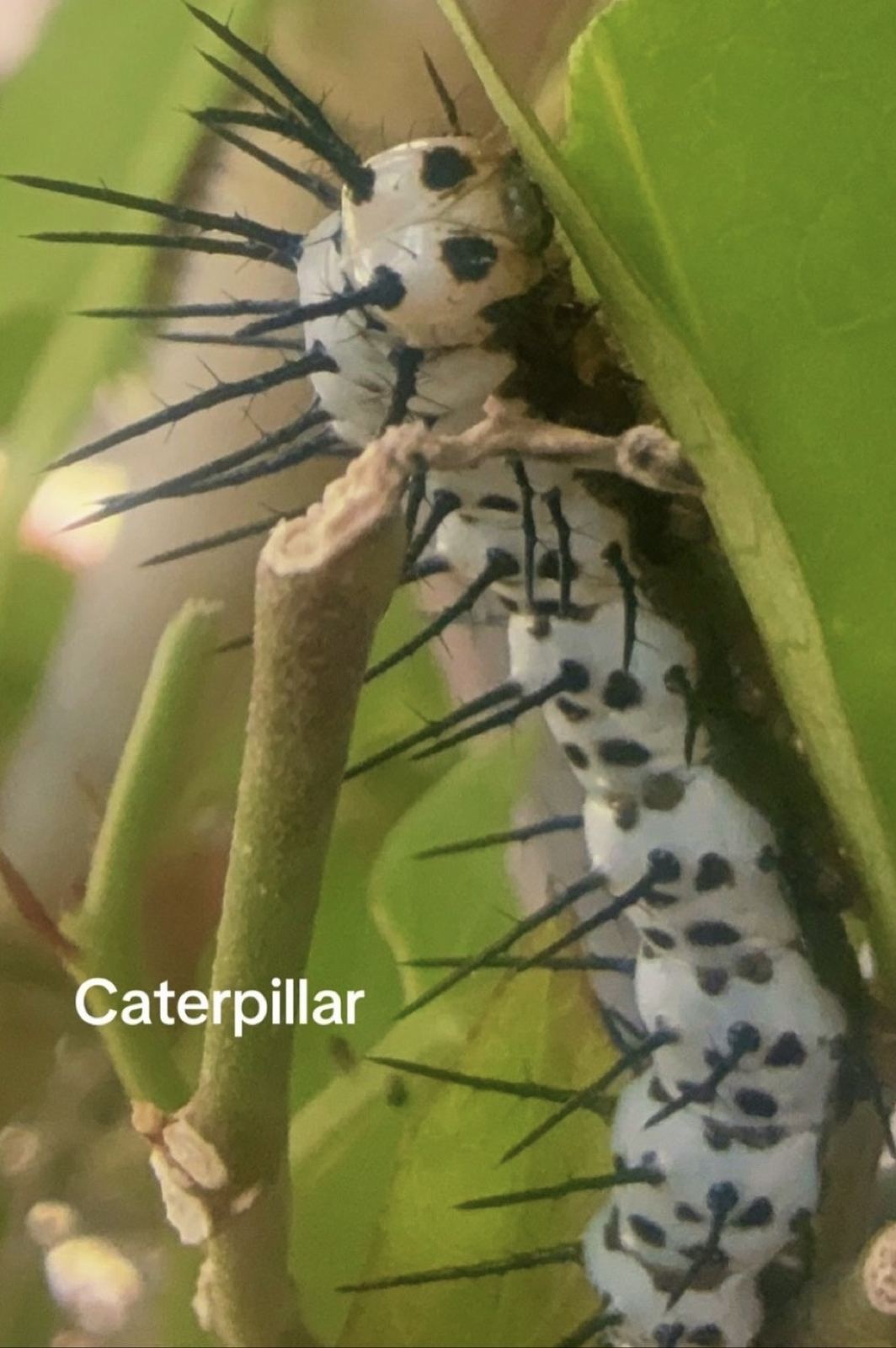
The caterpillar is white with black spots and dramatic long black spines. The spines look fierce but don’t sting people — they’re a warning sign to birds. Eating passion vine loads the caterpillar with natural compounds that make it taste terrible to predators, protection it keeps for life.
Ready to Form
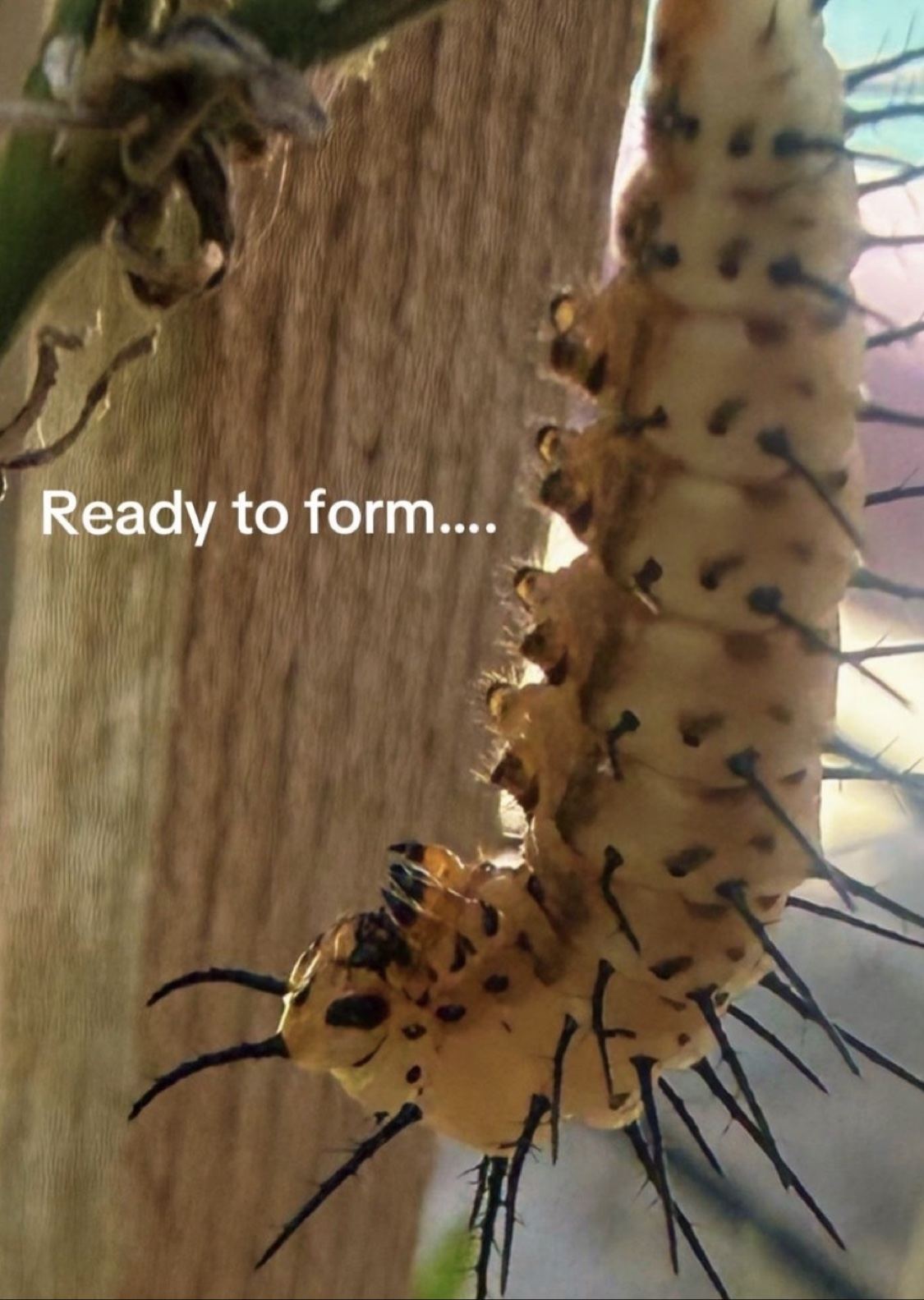
Fully grown, the caterpillar wanders off the vine, spins a tiny silk button, and hangs upside down in a J. Within about a day, its skin splits one last time…
Chrysalis
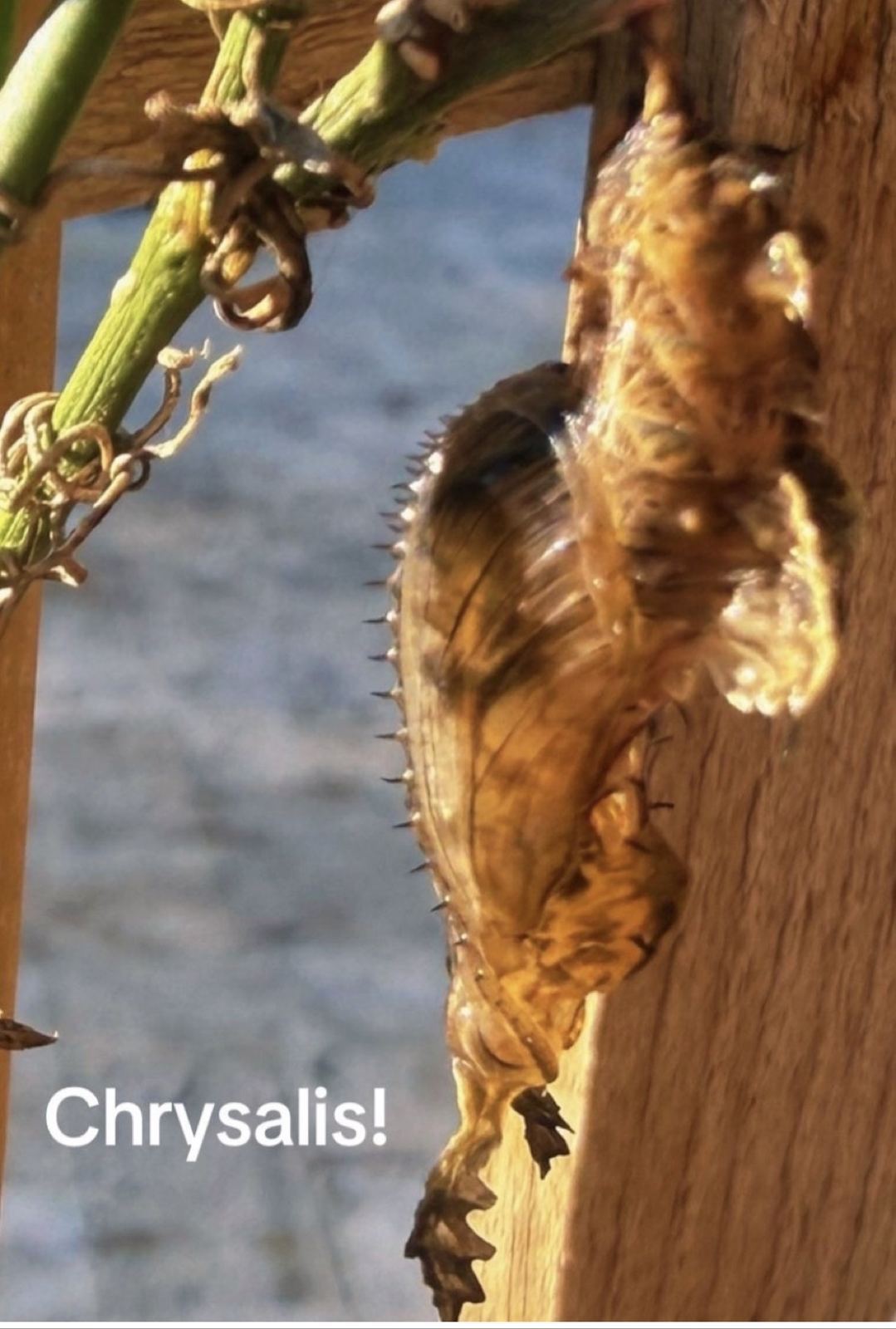
…revealing a golden-brown, spiky chrysalis that looks like a curled dead leaf. This chrysalis has a party trick: disturb it and it can flex and make a faint creaking sound to startle predators. Inside, the rebuild takes about one to two weeks.
Butterfly
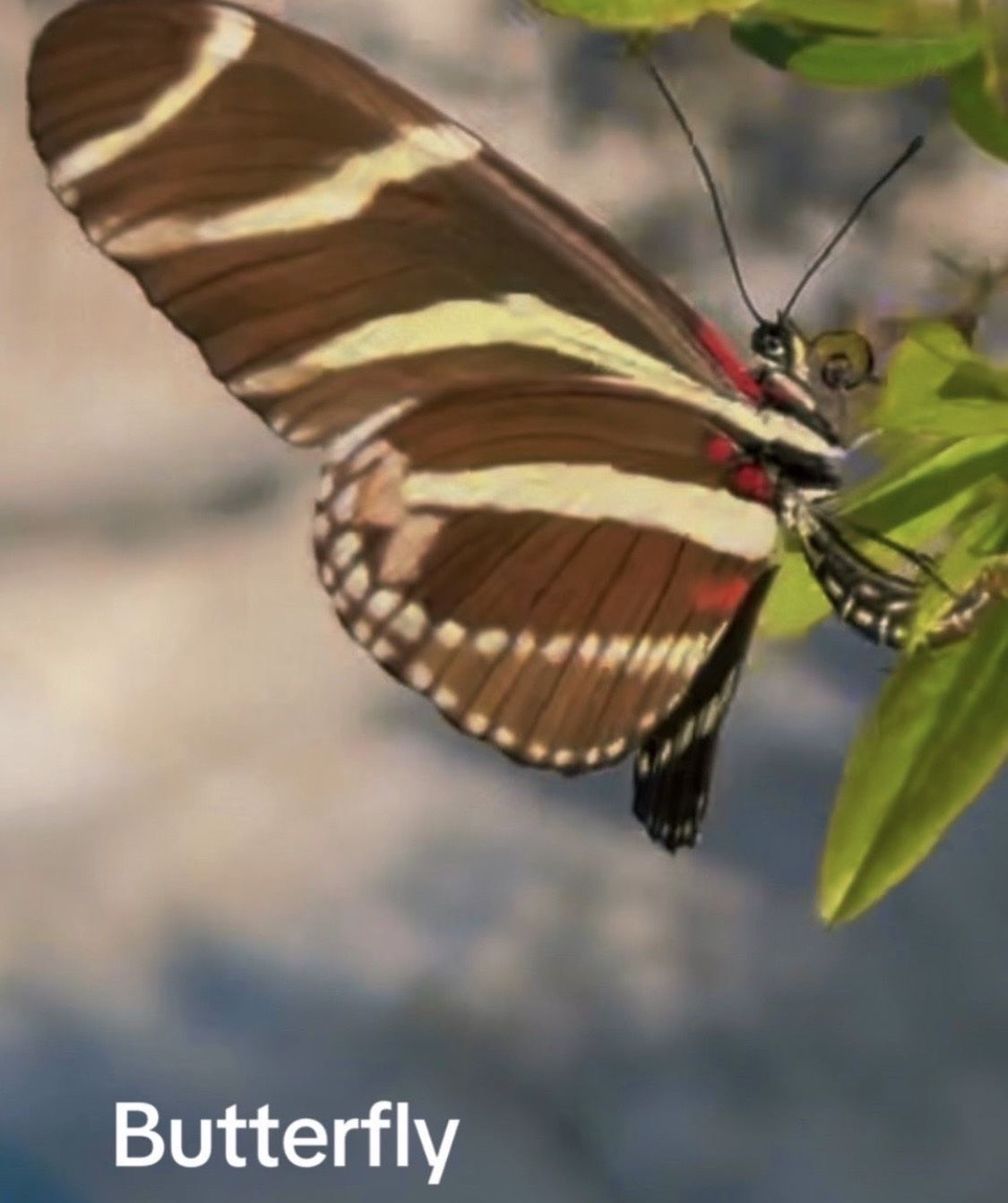
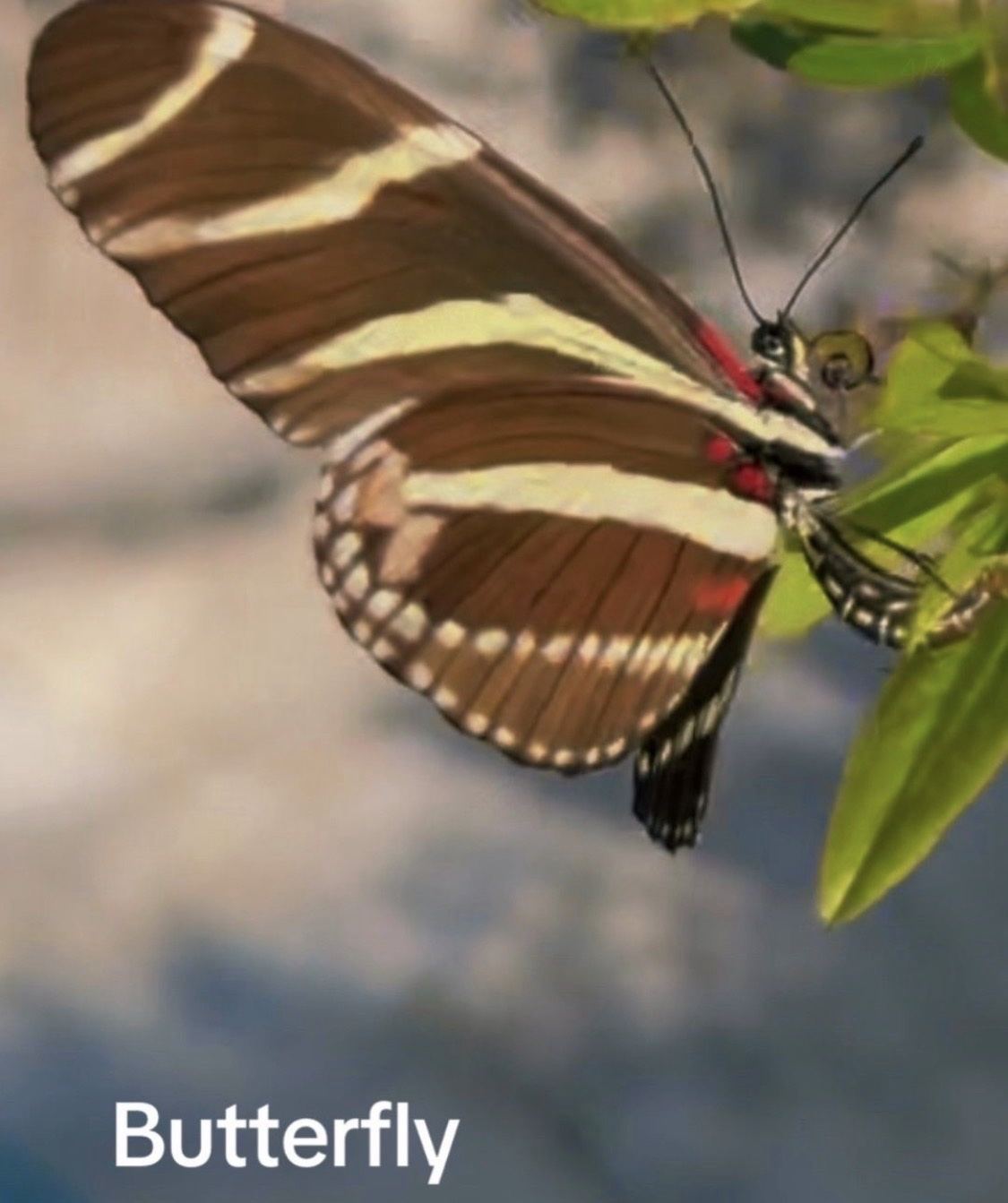
Out comes the adult — a beautiful butterfly built to last. Most butterflies live a few weeks; zebra longwings live for months, because they’re one of the only butterflies that eat pollen as well as nectar. That protein lets them keep laying eggs for most of their long lives. At dusk they gather to sleep in groups, returning to the same roost night after night.
How to Attract Zebra Longwings to Your Garden
Host plant: Plant passion vine — it’s the ONLY plant their caterpillars eat. Native choices like maypop (Passiflora incarnata) and corkystem passionflower (Passiflora suberosa) are best, and plant it where it gets a little afternoon shade.
Nectar + pollen plants: Feed the adults with lantana, porterweed, firebush, pentas and salvia — they visit flowers for both nectar and pollen.
Attract them: Give them a shady corner (they’re woodland-edge butterflies, not full-sun worshippers), skip all pesticides, and let a fence or trellis carry the vine — you’ll get butterflies floating at eye level.