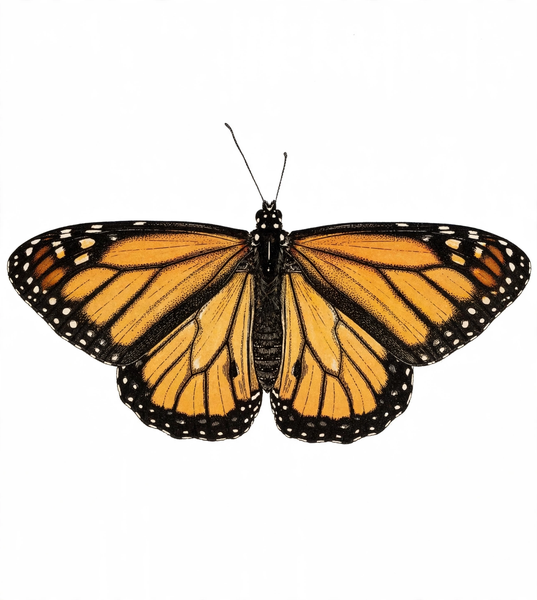
Monarch Migration: The 2,500-Mile Journey to Mexico (and Why November Matters)
Every fall, the monarchs of eastern North America do something no other insect on Earth does: they fly up to 2,500 miles to a handful of mountain forests in Mexico — forests none of them has ever seen. And they arrive, like clockwork, in November. Here’s how the monarch butterfly migration works, why November matters, and how your garden can be part of it. The stakes are real: in 2022 the migratory monarch was listed as endangered on the IUCN Red List — a warning that even the most famous of our endangered butterflies survives only if enough gardens keep feeding it.
Watch monarchs on the move:

A Butterfly That Lives Eight Times Longer
Summer monarchs live fast: two to six weeks of flying, mating and egg-laying. But the generation that emerges in late summer plays by different rules. Triggered by shortening days and cooling nights, these ‘Methuselah generation’ monarchs put reproduction on hold, stock up on nectar, and live six to nine months — long enough to fly to Mexico, survive the winter, and start the journey home. Same species, completely different life plan.
How Do They Know the Way?
No monarch has ever made this trip before — the ones flying south are the great-great-grandchildren of the ones that flew north. Yet they navigate with a built-in sun compass (their antennae keep time for it) and a magnetic sense that helps on cloudy days, riding thermal updrafts like tiny gliders for up to 50 miles a day. Biologists still call it one of the great unsolved maps in nature.
November in Mexico’s Oyamel Forests
By late October and early November, the travelers pour into the Monarch Butterfly Biosphere Reserve in the mountains of Michoacán, Mexico. They arrive around Día de los Muertos — the Day of the Dead — and in Mexican tradition the monarchs are said to carry the souls of ancestors home. There they cluster by the millions on oyamel fir trees, so thick the branches bend, and settle into a cool, quiet semi-hibernation. They’ll barely move until February and March, when warming days wake them to mate and stream north to Texas, where the females lay their eggs on fresh spring milkweed — and their children and grandchildren finish the trip north.
Florida’s Monarchs: The Exception
Here in Florida, many monarchs skip the trip entirely — our warm climate lets a resident population breed year-round, especially in the south of the state. Others pass through on their way. Either way, Florida gardens matter: migrants need fuel, and residents need the right milkweed. Which brings us to the most important thing in this whole post.
Plant Fall Nectar: Be a Migration Fuel Stop
A migrating monarch burns fat for every mile, and fall flowers are its gas stations. Plant nectar that blooms September through November — mistflower, goldenrod, asters, lantana and porterweed — and your garden can literally power a butterfly to Mexico.
Plant the RIGHT Milkweed (This Part Matters)
Monarch caterpillars eat only milkweed — but the KIND of milkweed matters, and this is where well-meaning gardeners get tripped up. Plant NATIVE milkweed: common, swamp, showy, butterfly weed and their regional cousins. Native milkweed follows the seasons — it dies back in winter, and that winter rest is a feature, not a flaw: it keeps monarchs on their natural schedule and breaks the cycle of Ophryocystis elektroscirrha (OE), a parasite that cripples monarch wings. Tropical milkweed — the red-and-yellow kind sold everywhere as ‘butterfly plant’ — grows and blooms all year in warm climates. Monarchs breeding on it through winter instead of migrating, plus year-round parasite buildup on the leaves, is exactly why conservation groups say: skip the tropical, plant the natives. Already grow tropical milkweed? Cut it to the ground in fall so it can’t scramble the migration signal.
Our Florida caterpillars thrive on swamp milkweed — it’s one of the four native varieties in this seed pack: