Giant Swallowtail Life Cycle: From Bird-Dropping Caterpillar to North America’s Largest Butterfly
The giant swallowtail is North America’s largest butterfly, with wings that can stretch six inches across — and it starts life as one of nature’s best disguises. Here’s its full butterfly life cycle — egg, caterpillar, and the long, patient wait from chrysalis to butterfly — photographed in our Florida garden.
Watch a giant swallowtail emerge from its chrysalis:
Egg
The female lays tiny pale yellow-green eggs, one at a time, on the fresh leaves of citrus-family plants. Each is no bigger than a pinhead, and in Florida’s warmth it hatches in about a week.
Caterpillar
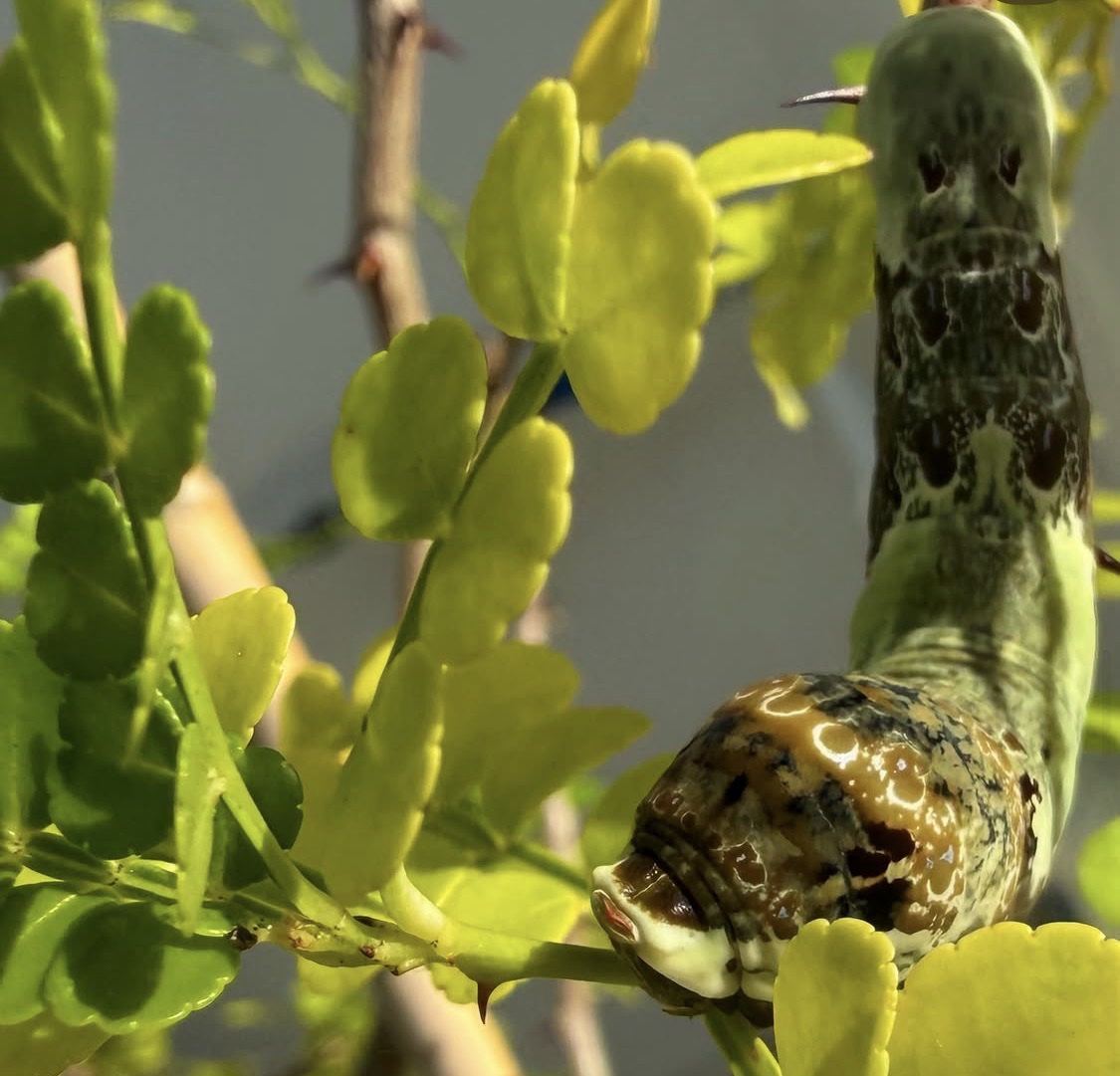
Meet the ‘orange dog.’ Young giant swallowtail caterpillars are mottled brown and white — a perfect imitation of bird droppings, and birds leave them strictly alone. As it grows, it turns olive-green and brown with cream patches and a swollen chest with eyespots, like a tiny snake rearing up. And it has a secret weapon: poke it, and a bright red-orange forked ‘horn’ — the osmeterium — pops out behind its head and lets off a strong pineapple-like smell.
Chrysalis
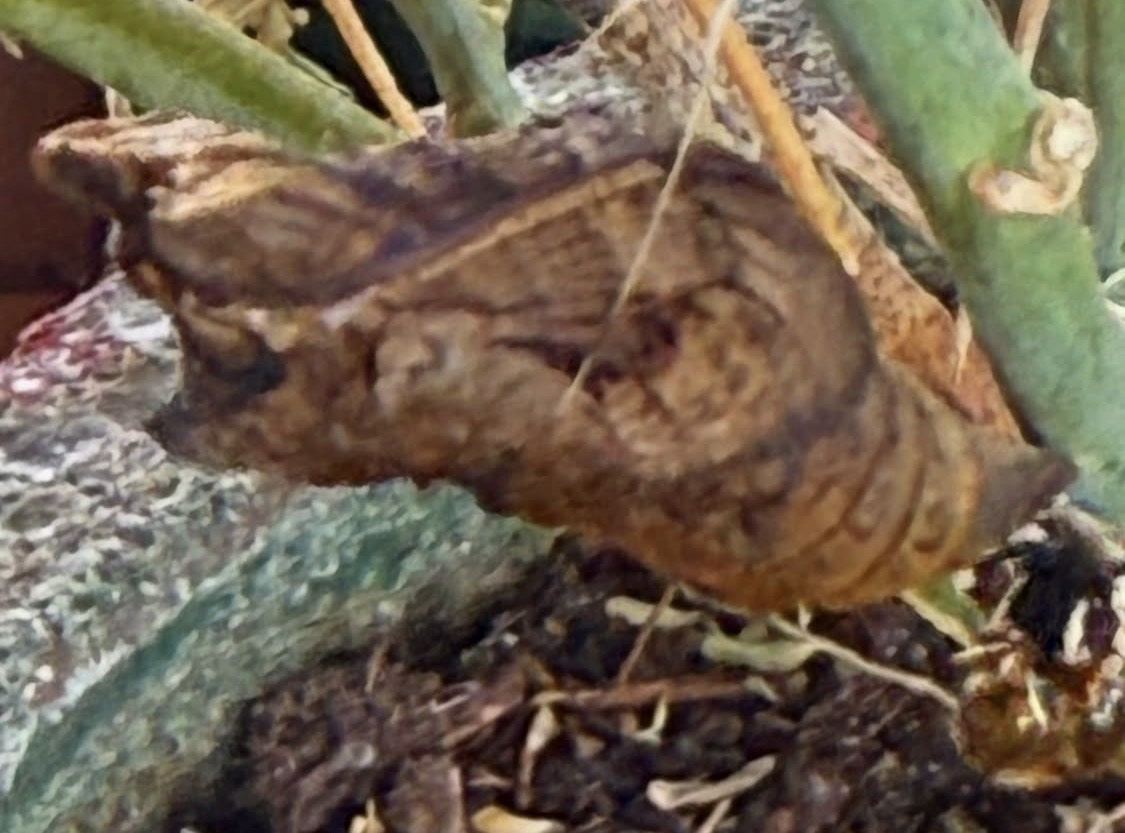
The chrysalis is a masterclass in camouflage — rough, brown and bark-textured, held upright against a stem by a silk safety belt. It can wait a few weeks… or, if the season turns, sleep through the whole winter and emerge in spring. When the morning comes, it usually comes early — most giant swallowtails emerge at dawn.
Butterfly
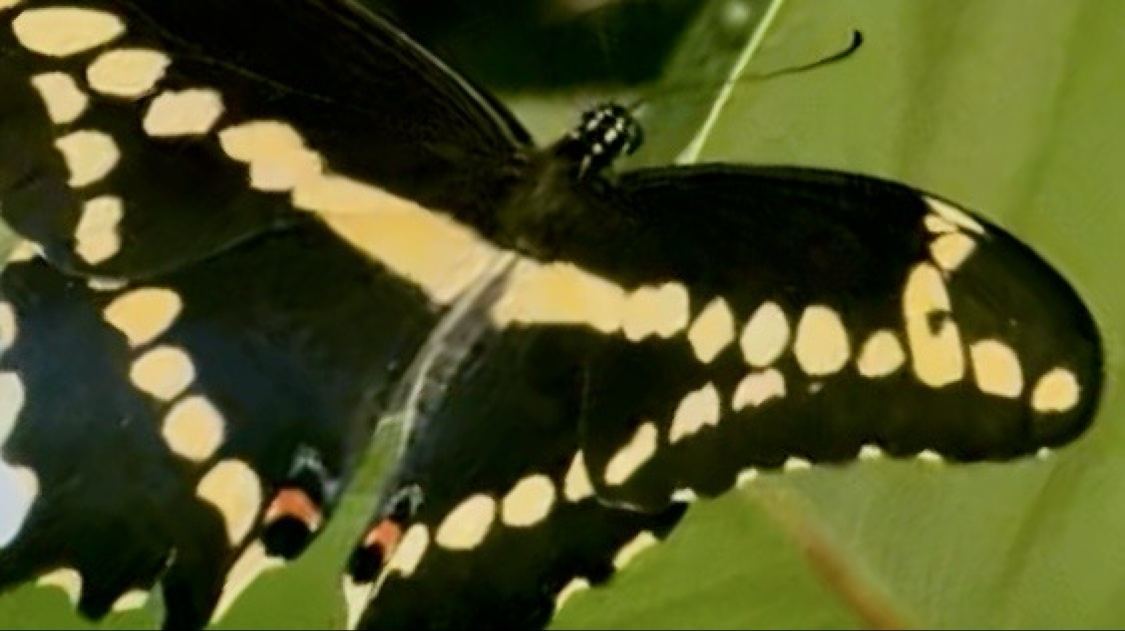
Out unfolds the giant — one of the most beautiful butterflies in North America: black wings crossed by bold yellow bands, a row of yellow spots along the edges, and a red-orange eyespot near each tail. They fly with slow, sailing wingbeats — more gliding bird than fluttering butterfly — and patrol the same garden routes day after day.
How to Attract Giant Swallowtails to Your Garden
Want this swallowtail butterfly patrolling your yard on six-inch wings? Start with what its caterpillars eat.
Host plants: Their caterpillars eat only the citrus family: lemon, orange, lime and grapefruit trees — and RUE. No citrus tree? Plant rue. From our garden: giant swallowtails never visited until we planted rue alongside our citrus — then they came and stayed. Wild natives like prickly ash, Hercules’ club, hop tree and wild lime work too.
Nectar plants: Adults sip nectar from lantana, bougainvillea, azalea, golden dewdrop, pentas, zinnias and hibiscus — big, open blooms they can land on.
Attract them: Give them sun for the flowers and a little patience with ‘ugly’ caterpillars on your citrus — those bird-dropping lookalikes are next summer’s giants. Skip pesticides, especially on citrus.