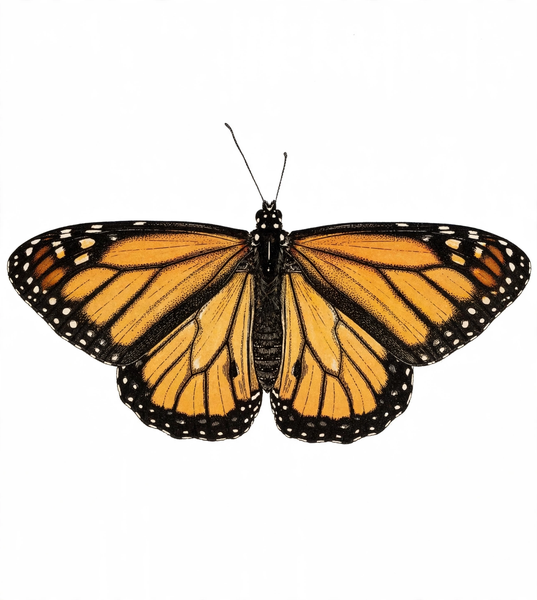
Giant Swallowtail Emerging From Its Chrysalis — A Rare Find
Everything about the giant swallowtail is outsized. It’s the largest butterfly in North America, its caterpillar disguises itself as a bird dropping and defends itself with a forked, orange, funky-smelling “horn,” and its chrysalis — brown and twig-like — can wait out an entire winter before deciding the time is right.
So why is this footage such a rare find? Two reasons. First, timing: giant swallowtails usually emerge in the early morning, often before most of us are even awake, and the whole event is over quickly. Second, camouflage: the chrysalis is mottled brown and shaped to look like a dead twig or a flake of bark, strapped flat against a stem where nobody ever notices it. Most gardeners walk right past one for weeks. Even spotting a chrysalis is luck — being there with a camera at the moment it opens is rarer still.
The caterpillar stage runs the same con. Young giant swallowtail caterpillars are mottled brown and white with a glossy sheen, patterned to look exactly like a fresh bird dropping sitting on a leaf — a disguise so unappetizing that hungry birds leave them completely alone. Only in its final stage does the caterpillar turn green with dramatic false eyespots, bluffing its way through its last days of eating before pupating.
So when one finally emerges on camera, it’s an event — a front-row seat for the journey from chrysalis to butterfly. Watch how much wing has to unfold: nearly six inches of dark chocolate and gold, packed into a case the size of your thumb. If you have a citrus tree, a hop tree or prickly ash nearby, this giant may already be visiting your yard — check the leaves for those unglamorous little “bird dropping” caterpillars before you judge them.
Host plants: The citrus family — lemon, orange and lime trees, prickly ash, Hercules club, hop tree — plus rue, the herb in the same family, for gardeners without a citrus tree
Nectar plants: Lantana, butterfly bush, zinnia, milkweed
Attract them: Plant a citrus tree or another host plant and let it be. Citrus growers call the caterpillars “orange dogs” and reach for the spray — leave those strange-looking caterpillars alone instead, and they’ll repay you by becoming one of the most beautiful butterflies in North America — and the largest. And here’s a tip from five years of raising butterflies in my Florida garden: the giant swallowtails never showed up here at all until I planted rue alongside my citrus — now they find the garden every season. No room for a tree? A pot of rue will do the job.