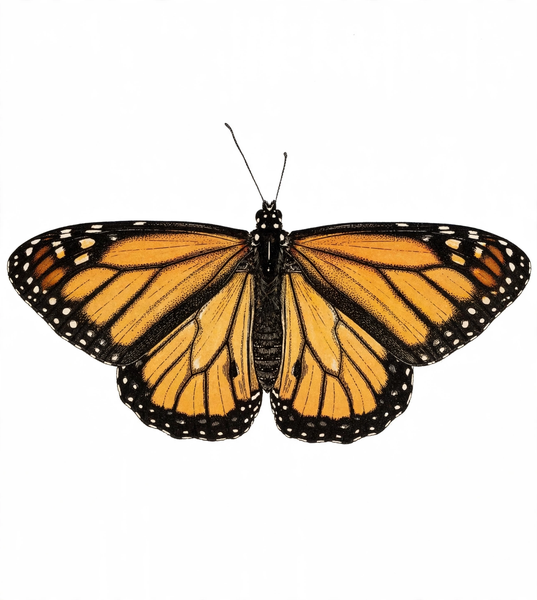
Eclosion: How a Monarch Butterfly Emerges From the Chrysalis
There’s a morning in every butterfly keeper’s life that never gets old. The chrysalis — jade green for nearly two weeks — turns dark, then clear, until you can see folded orange wings pressed against the shell. That’s your cue: within hours, the case splits and a monarch pulls itself out, wings crumpled like tissue paper. Scientists call this moment eclosion — the emergence of the adult butterfly from its chrysalis — and after two weeks of waiting, it’s over in minutes. It’s the moment the whole butterfly life cycle has been building toward: watch a butterfly transform from chrysalis to butterfly once, and you’ll set an alarm for it every time.
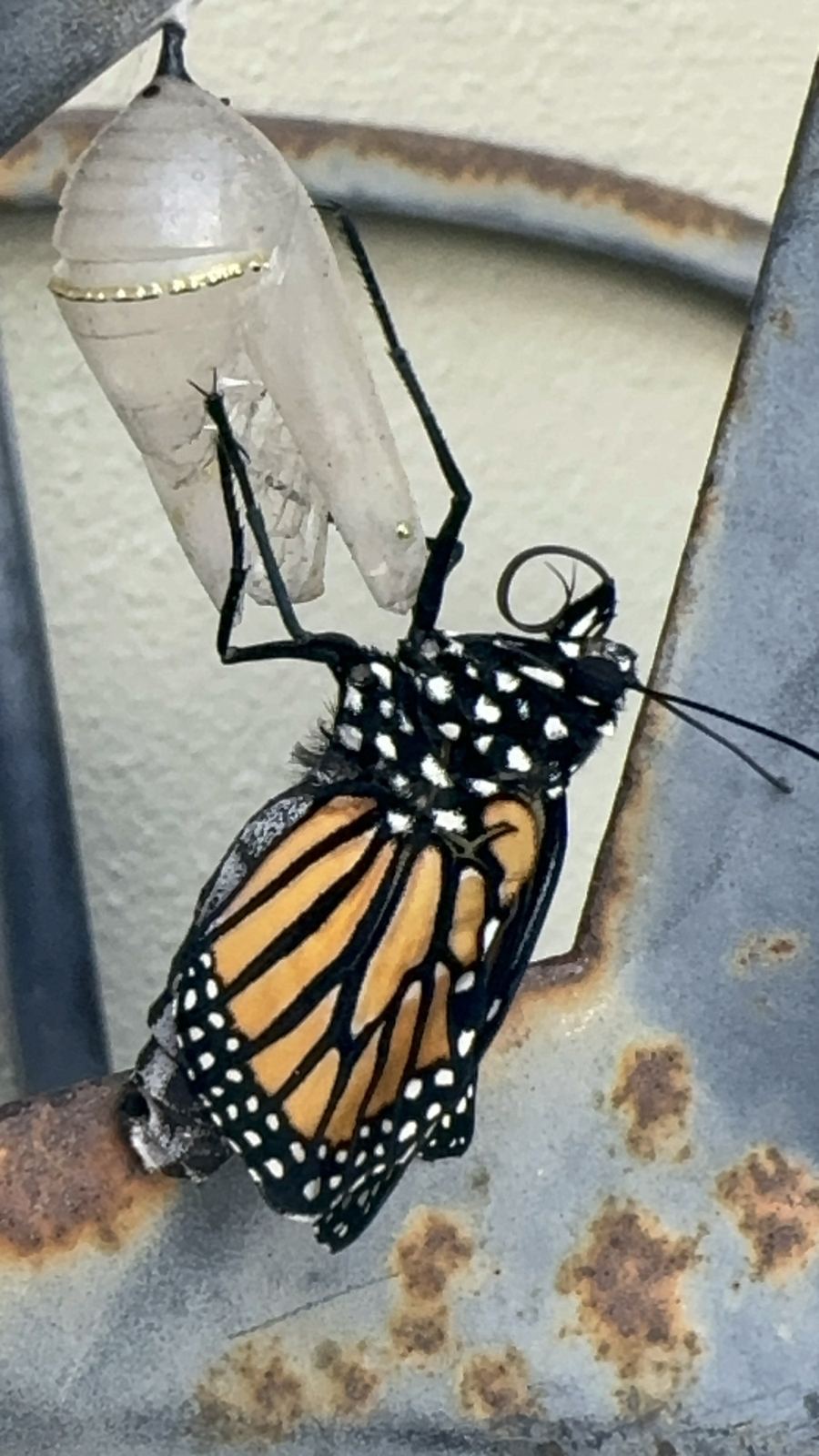
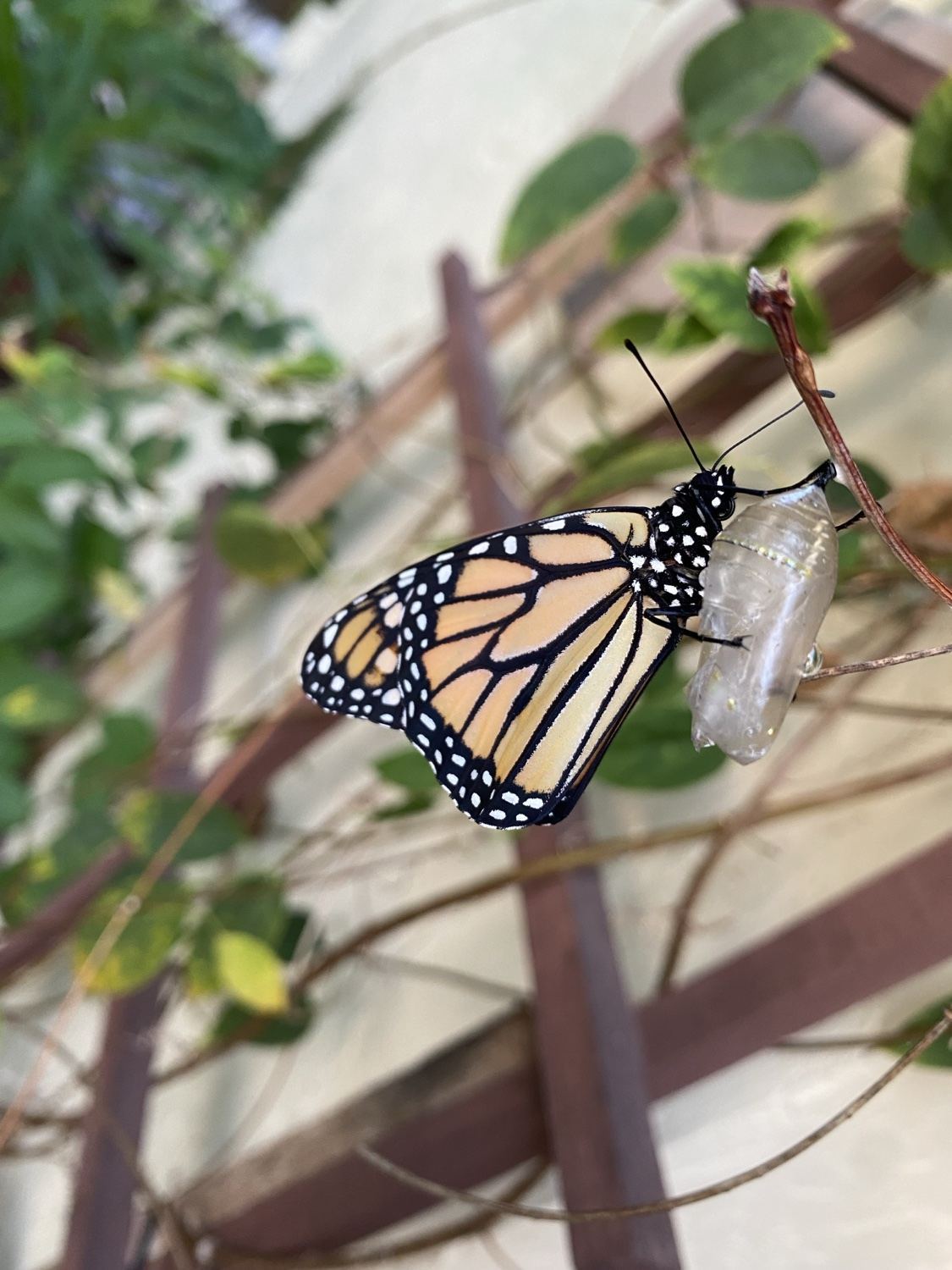
What happens next is pure hydraulics. The butterfly hangs and pumps fluid from its body into the wing veins, and the wings unfurl and stiffen over the next two to four hours. It’s a front-row lesson in butterfly wings anatomy: the wings come out crumpled and soft, then stretch flat as fluid fills the veins — each one a living panel covered in thousands of tiny overlapping scales, with the veins branching through it like the leading in a stained-glass window. Disturb it now and the wings can set wrong — so the only job is to film, wait, and let the sun do the work. In this video you can see the whole row of chrysalises behind it, each one a butterfly with an appointment of its own.