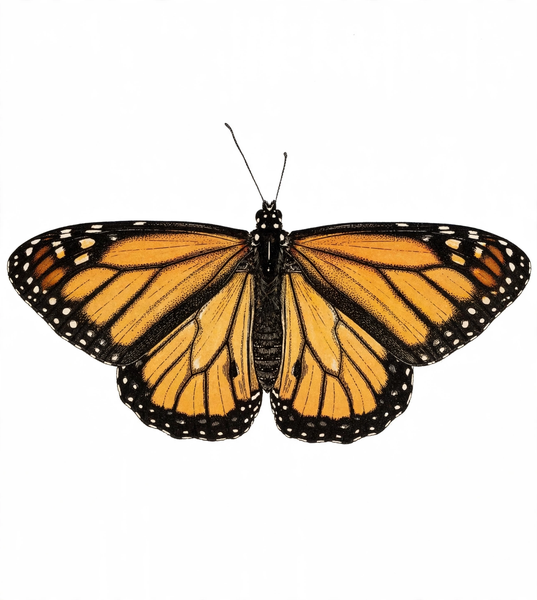
Butterfly Life Cycle
A butterfly’s life is really four lives in one. The creature that hatches from the egg doesn’t just grow bigger — it is taken apart and completely rebuilt, twice, before it ever flies. That transformation is called metamorphosis, and humans have been watching it in wonder for thousands of years.
This guide walks through every stage of the butterfly life cycle using real photographs from a working Florida butterfly garden, where monarchs, queens, zebra longwings, and giant swallowtails are raised and released season after season. You’ll learn what happens in each stage, how long it lasts, what the caterpillars eat, and how to invite the whole cycle to happen in your own yard. And if you’re teaching kids, there are free printables and activities further down — every one of them made from real photos, not clip art.
The Four Stages of the Butterfly Life Cycle
Stage 1: Egg — A Beginning Smaller Than a Sprinkle
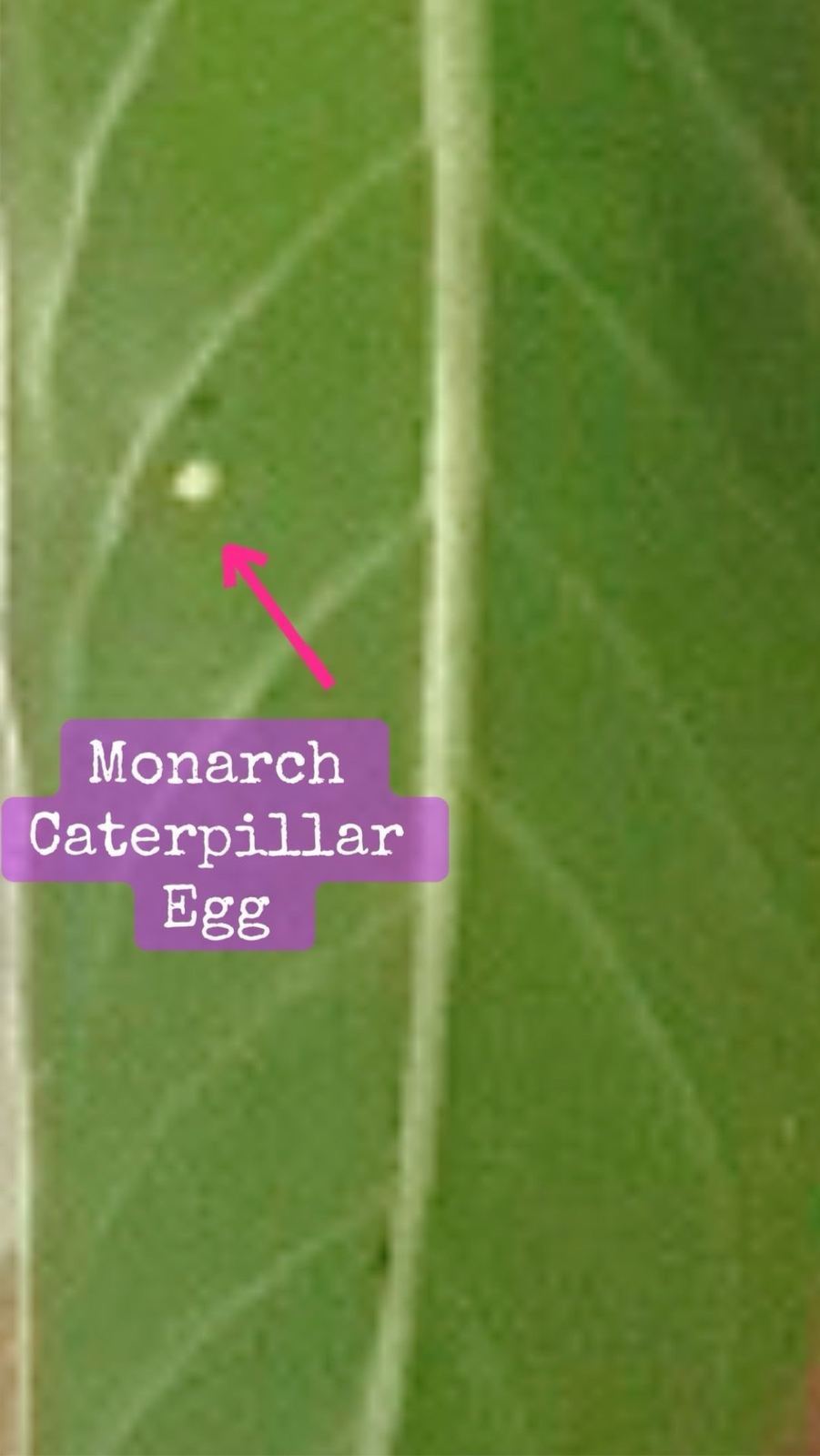
Every butterfly starts as an egg so small you could walk past it a hundred times and never see it. A monarch egg is about the size of a sprinkle, pale yellow-green, and shaped like a tiny ribbed dome. Butterfly mothers are picky real estate agents: a female monarch lays each egg — one at a time, often hundreds over her lifetime — on the underside of a milkweed leaf, because milkweed is the one and only food her babies can eat. Zebra longwing mothers choose passion vine, and giant swallowtail mothers choose rue and citrus leaves. The egg stage lasts about 3 to 5 days, and if you look closely just before hatching, you can see the dark head of the caterpillar through the shell.
Stage 2: Caterpillar — The Eating Machine
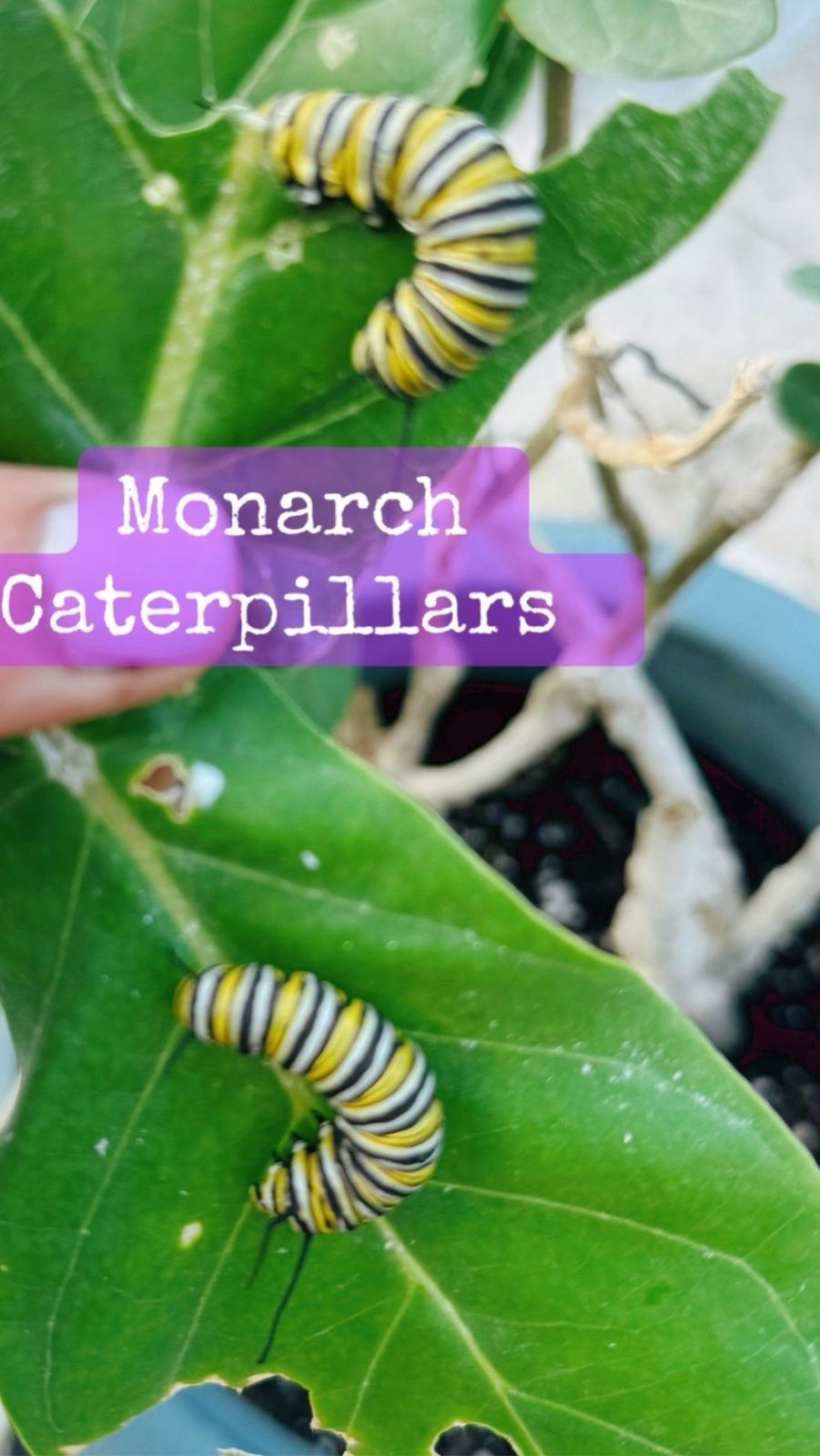
The caterpillar that chews its way out of the egg has one job: eat. A monarch caterpillar’s first meal is its own eggshell, and then it moves on to milkweed — and almost nothing else. Monarchs and queens both grow up on milkweed (always plant milkweed native to your area — more on why that matters below). Zebra longwing caterpillars munch passion vine, and giant swallowtail caterpillars feed on rue and citrus.
A caterpillar’s skin doesn’t stretch, so as it grows it sheds that skin five times, like outgrowing five sets of pajamas. Between sheds it’s eating nearly nonstop, and in about two weeks a monarch caterpillar grows from the size of an eyelash to roughly 2 inches long — multiplying its weight thousands of times over. Different species wear different disguises: monarchs sport bold yellow, black, and white stripes; queen caterpillars wear an extra pair of wiggly feelers; and the young giant swallowtail caterpillar looks so much like a bird dropping that hungry birds leave it completely alone. Nature’s best camouflage is looking like something nobody wants to eat.
Stage 3: Chrysalis — The Quiet Rebuild
When the caterpillar is fully grown, it wanders off its host plant, spins a tiny silk button, and hangs upside down in a J shape. Then something astonishing happens: it sheds its skin one last time, and underneath is not a caterpillar at all — it’s a chrysalis, smooth and jade-green, freckled with gold. (The chrysalis stage is called the pupa; “chrysalis” is the butterfly’s pupa, while a moth’s is usually wrapped in a silken cocoon.)
Inside that still, quiet case, the caterpillar’s body is dissolved and rebuilt into a completely different animal — wings, long legs, coiled drinking-straw tongue and all. This stage lasts about 8 to 15 days in a monarch. Near the end, the chrysalis turns dark and transparent, and you can see the folded orange wings inside. When a chrysalis goes clear and dark, a butterfly is usually less than a day away.
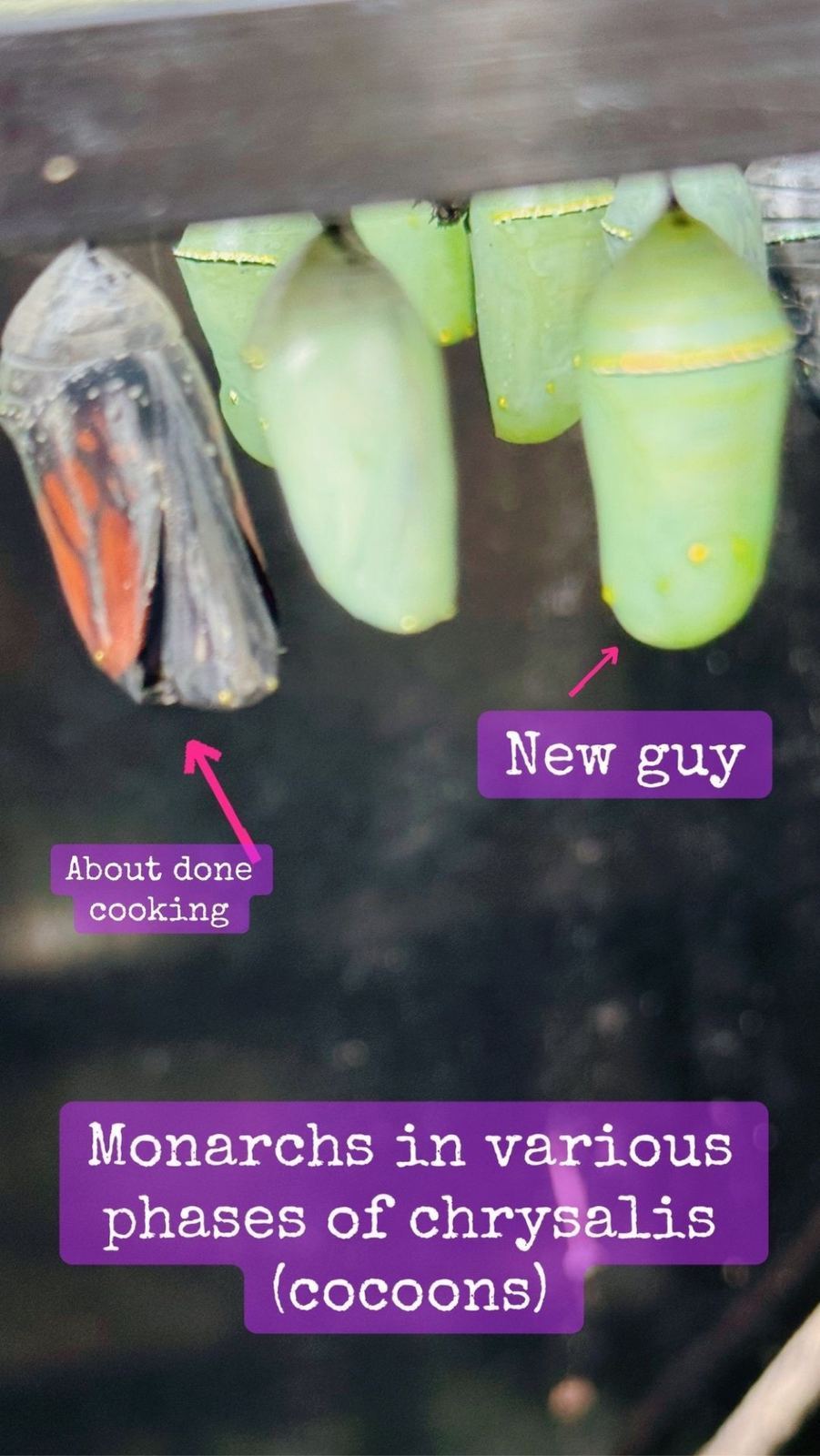
Stage 4: Butterfly — First Flight
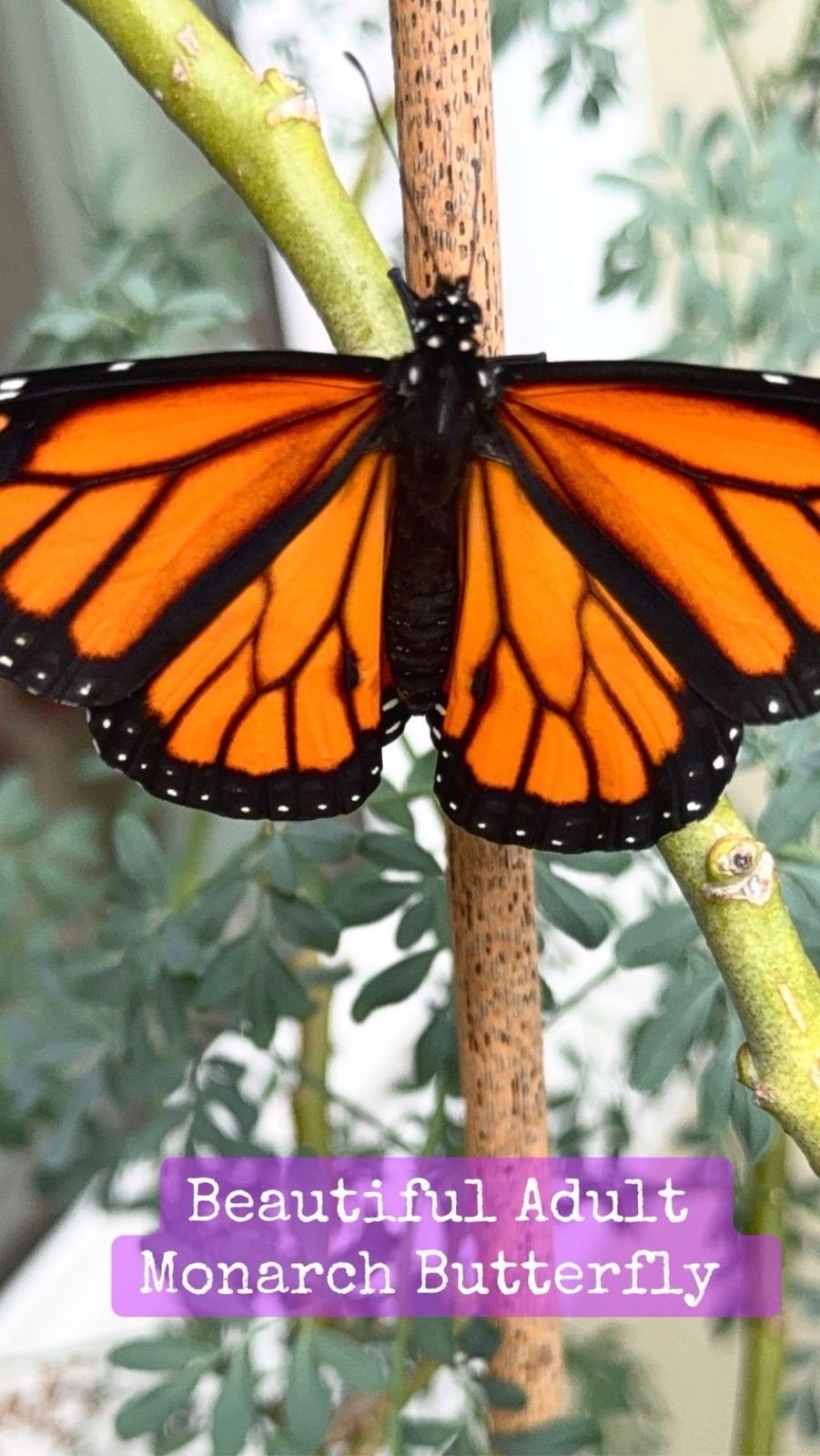
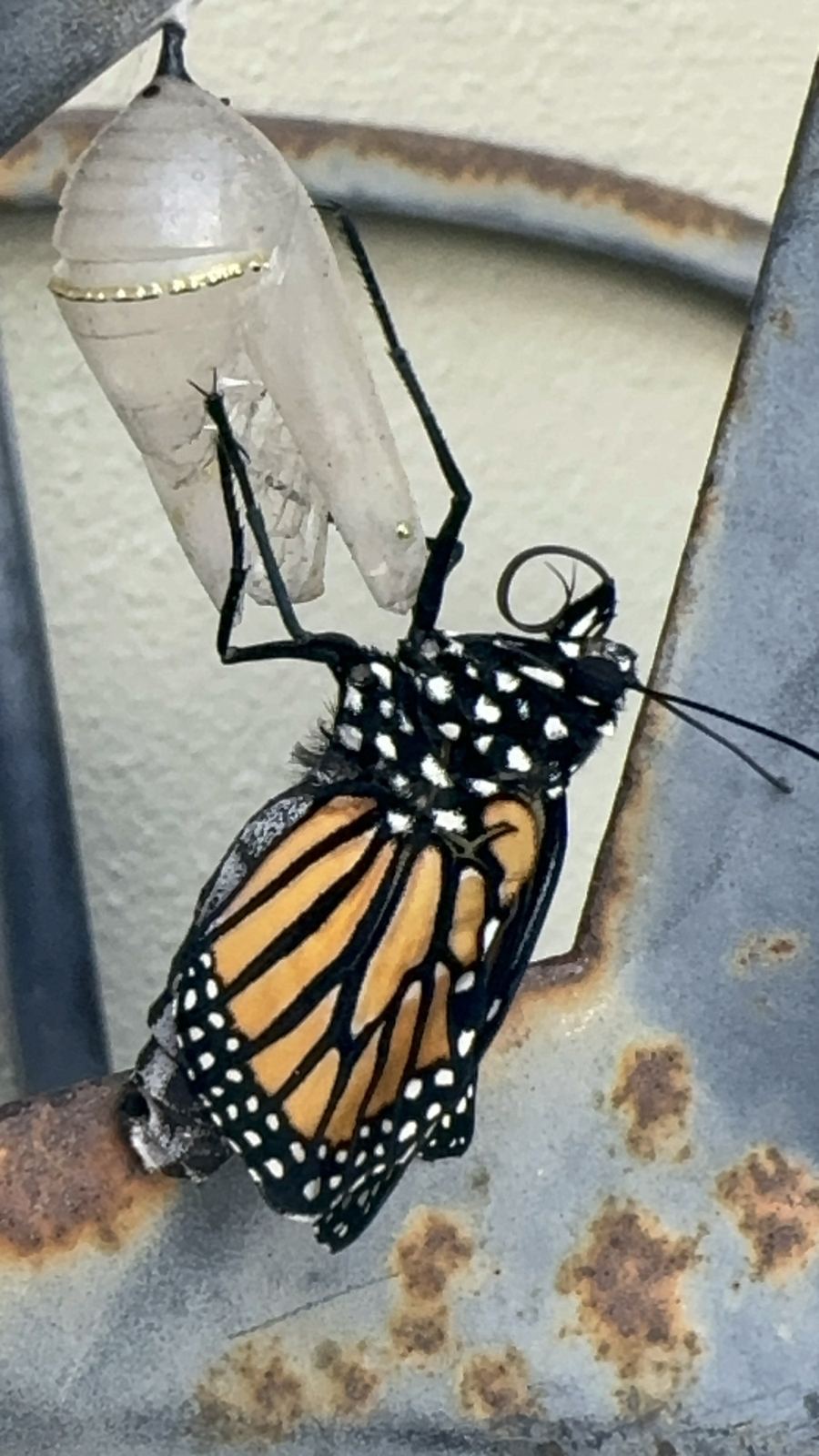
The chrysalis splits, and out climbs a butterfly with crumpled, wet wings. This moment is called eclosion. The new butterfly hangs below its empty case and pumps fluid from its body into its wings, unfolding them like a paper fan, then lets them dry in the sun and air for a couple of hours. One of the first things it unrolls is its proboscis — a built-in straw it will use to sip nectar from flowers like mistflower, lantana, zinnias, and porterweed.
From there, the cycle starts over: adults find mates, females search out the right host plant — milkweed for monarchs and queens, passion vine for zebra longwings, rue and citrus for giant swallowtails — and lay the next generation of sprinkle-sized eggs. A summer monarch lives about 2 to 6 weeks as an adult, but the special late-summer generation can live up to 8 months, because those are the butterflies that make the great migration.
🦋 Want the whole cycle on paper? Every stage in this guide is also a free printable — see the full set on our Free Printables page.
How to Attract Butterflies to Your Yard
Watching the life cycle in your own yard takes just two kinds of plants, and the trick is planting both. Nectar plants feed the adults; host plants feed the babies. A yard with only flowers gets visitors. A yard with host plants gets residents — eggs, caterpillars, chrysalises, and brand-new butterflies.
Step 1: Plant the host plants your local butterflies need.
- Monarchs and queens need milkweed — and it must be milkweed native to your area (swamp milkweed is a star in the Southeast). Here’s why “native” matters: tropical milkweed, sold in many garden centers, doesn’t die back in winter. That sounds helpful, but it encourages monarchs to keep breeding through winter instead of migrating, and its year-round leaves build up a harmful parasite called OE (Ophryocystis elektroscirrha) that sickens caterpillars and weakens adults. Native milkweeds go dormant on schedule, which keeps both the migration and the butterflies healthy.
- Zebra longwings — Florida’s state butterfly — need passion vine (corkystem and maypop are good native choices).
- Giant swallowtails need rue and citrus trees. In this garden, the giants never visited at all until rue was planted alongside the citrus — then they came.
Step 2: Plant nectar flowers in generous clusters. Butterflies taste with their feet and shop by color, so big, sunny drifts of flowers beat single pots. Reliable favorites: mistflower (a queen butterfly magnet), lantana, zinnias, porterweed, and native milkweeds in bloom. Aim for something blooming in every season.
Step 3: Keep it safe. Skip pesticides on and around your butterfly plants — what kills aphids also kills caterpillars. Add a shallow dish of water with pebbles for a drinking spot, leave a sunny stone for basking, and let a small corner grow a little wild. Do those things, and the life cycle won’t just pass through your yard — it will move in.
Free Butterfly Coloring Pages PDF
Everything in this guide is free to print for your classroom, homeschool, or kitchen table. Our coloring pages are traced from real photographs of real raised butterflies — the same wings, veins, and spots the garden actually grows — so kids are coloring the genuine article. Start with the hero: the full 6-page Activity Pack, with a fact sheet, a labeling worksheet, sequencing cards, a coloring page, and a butterfly observation journal.
Get new printables first 🦋
New species, new coloring pages, and new activity packs land a few times a season — join the list and they’ll come to your inbox before they go anywhere else.
Prefer everything in one place? The Free Printables page has the whole library, and it grows with every species raised in the garden.
Butterfly Life Cycle Activities for Kids
- Label the life cycle. Print the Activity Pack’s labeling worksheet (a true butterfly life cycle worksheet, built from photos): kids match egg, caterpillar, chrysalis, butterfly to the real stages — then check the upside-down answer key.
- Cut and order. The sequencing cards in the pack arrive scrambled on purpose. Cutting, ordering, and retelling the cycle in their own words is the lesson sticking.
- Keep a butterfly journal. The pack’s observation page asks kids to draw the butterfly they saw, note the plant it was sitting on, and write one new thing they learned. Bring it outside; the garden is the classroom.
- Adopt a host plant. Give a child one plant to guard — a pot of native milkweed or a passion vine — and check it for eggs every morning. Nothing teaches the cycle like waiting for it.
- Count for science. On a sunny walk, tally every butterfly you see and where. Simple counts like these are the start of real citizen science.
Ready to go further? The deluxe Butterfly Coloring Collection — more species, more pages, the premium set — plus fine art prints of the garden’s butterflies, live in our Etsy shop.
Butterfly Life Cycle FAQ
How long does the butterfly life cycle take?
For a monarch, about 4 weeks total in warm weather: 3–5 days as an egg, about 2 weeks as a caterpillar, 8–15 days in the chrysalis, and then the adult flies. Cooler weather slows every stage down.
What do monarch caterpillars eat?
Milkweed, and only milkweed — which is exactly why planting milkweed native to your area matters so much. The caterpillars absorb the milkweed’s natural compounds, which makes them taste terrible to birds. Queen caterpillars eat milkweed too; zebra longwings need passion vine and giant swallowtails need rue and citrus.
What is the chrysalis stage called?
The chrysalis is the butterfly’s pupa — the stage between caterpillar (larva) and adult. “Chrysalis” is the name for a butterfly’s pupa specifically; moths usually spin a silk cocoon around theirs.
Do all butterflies migrate?
No. The monarch’s fall migration — up to 2,500 miles to the oyamel fir forests of Mexico — is the famous exception. Most butterflies, including queens and zebra longwings in warm climates like Florida, stay local and raise families year-round wherever their host plants grow.
How can kids help butterflies?
Plant one host plant (native milkweed is the easiest start) and one nectar flower, skip the bug spray on them, and tell other people why. Kids who have watched one egg become one butterfly tend to protect them for life — and every garden that joins in becomes one more safe stop on the map.